Category: Word on the Street

  • Testimony from the Furniture Bank

    Sam, a little boy in my class, lived in a challenging environment. Speaking with his mom made it seem that he lived a typical life, but as I listened, I sat on a ratty old mattress that served as the “sofa.” There was little other furniture visible from where I sat, and as I later considered my experience, I realized that this four-year-old lived in a home where the funds went to purchases other than those that would benefit a growing boy. It’s easy to judge in situations like this, much harder to keep a clear perspective. I was there for this little boy and that’s what I tried to keep in mind.
    Fast forward a few months, after further collection of information. This family was about to go homeless due to the diversion of funds, and in fact it did happen shortly before Christmas. It broke my heart to see Sam initially relieved to live in stable housing with adequate food, then begin to sink as the effects of living in a shelter weighed on him. Mom and the four children lived in the shelter for four months, eventually saving enough money for a security deposit on a subsidized townhouse where they would live. Thinking I already knew the answer,  I asked mom what they needed. Her answer was “everything.”
    So on a Saturday morning, Mom and a helper met us at the Furniture Warehouse with a rental truck. We filled this truck with furniture of her choosing for every room, and additionally, linens, cleaning supplies, and even a dining room hutch! The most remarkable part of this morning was that the warehouse was so well stocked, mom could actually choose a decorating style and select items that met that criteria. What a gift to have the freedom to choose! We were thrilled that she could have that experience.
    Perhaps a month later, I went to visit at their new home and it looked well-loved. Places for everyone to sit – in chairs! – placemats on the table, dishes in the sink. Such a change from six months ago. It was rewarding to know that I had been part of this opportunity. Everyone seemed settled and content, and that is quite the thing to be able to provide.
    Life is not perfect, and I later heard rumor – and it was only rumor – that mom had relapsed and they were not doing well. I don’t know if they lost their housing or not. But I now see Sam pretty frequently at school, and he is all smiles, always greeting me with his mischievous smile, and when I’m lucky, a hug. I wish I could save the world, or even set this little guy on a permanent path to life success, but that’s not what’s in my hands. But I do hope that that one Saturday morning while he and I sat in the truck eating donuts while his mom chose new furniture created a permanent sense of being unconditionally loved by someone in his life, someone who gave him and his family a chance. That it was me that made that happen makes no difference; I only wish that he remembers what hope feels like for the rest of his life. It all started with a generous selection of furniture at the Warehouse.
    Submitted by Gwen Reilly
  • Coming Soon: The Community Cafe

    In the next several months, Micah will launch a community cafe in the fellowship hall of Fredericksburg Baptist Church. The goal is to provide healthy food with hospitable service in a welcoming atmosphere, just like any fast casual restaurant the community might eat in on a daily basis. Guests will be greeted at the door with a menu and have choices between a couple different items that will change from week to week. They will place an order and be given a chance to make a suggested donation, give more, less or nothing at all. With a pay what you can structure, the cafe will literally be open to anyone—from the community business person to someone who slept on the street last night. No matter their circumstances, guests will receive a number and have their food brought to them by one of our many volunteers. Volunteers will be a big part of this operation, but the core function of the cafe—food preparation—will be handled by our current and formerly homeless who, as part of the kitchen team, will be learning how to work in a restaurant. Upon completion of the five-week program, participants will have basic food service skills, be Servesafe certified, have a reference and be assisted with finding a permanent job. By supporting the cafe, the community will generate healthy food options for people struggling with food insecurity, encourage all members of our community to share common spaces, and equip people with barriers to employment for mainstream jobs. Please pray for us as we embark on this new journey of cultivating community and caring for neighbors.

  • Foster Parent Info Sessions

    A foster parent shared: “Who am I to say “no” to foster parenting because of how it might hurt me when a child leaves? Who am I to protect my own feelings when a vulnerable child is given no choice in the matter? A child who is alone with possibly no one else to step up and protect him/her? There is rarely a line of folks waiting to take in a foster child. If you don’t do it, there may be no one else. That’s reality. United Methodist Family Services averages 50 calls a month looking for foster homes for these kids. When the system breaks down and at risk kids do not get what they need, children face greater chance of becoming homeless as adults. Join Micah and UMFS for one of three info sessions, and learn more about how you can help.

    Wednesday 6/21 at 5pm
    Fredericksburg UMC @ 308 Hanover St.

    Wednesday 7/13 at 5pm
    St. George’s Episcopal, 905 Princess Anne St.

    Wednesday 8/9 at 5pm
    Christ Lutheran Church, 1300 Augustine Ave.

    RSVP to Megan Kettyle, [email protected] or 571-206-0700 (cell)

  • Hiring: Trial Employment Specialist

    The Transitional Employment Specialist is responsible to the Income Navigator for overseeing the trial work program. The program provides individuals with multiple barriers an opportunity to transition back into the work force by developing and practicing work-readiness skills through volunteer work opportunities with supports and supervision.

    Responsibilities:

    Community Relations:

    • Nurture community relationships that maintain Micah’s ability to access volunteer-work opportunities and support guest’s in their job pursuits
    • Maintain dialogue with organizations providing volunteer work opportunities, create volunteer work schedules and manage guest challenges
    • Work with Micah’s Servant-Leader of Programs to coordinate and manage volunteers who assist with needs related to trial work opportunities

    Technical Support and Employment Readiness

    • Support guests in trial work opportunities by providing positive reinforcement, direct instruction, constructive criticism, redirection, and modeling
    • Assess each guest’s work performance through weekly individualized performance evaluations
    • Offer budgeting support and assistance with managing earned income
    • Provide transportation to and from trial work opportunities and employment related appointments as needed
    • Coach guests in employment readiness needs, such as hygiene, dress, identification, transportation, attitude, scheduling, and other support for overcoming barriers to employment
    • Collaborate with Micah housing case managers and employment specialist to better support guest needs and income goals

    Documentation

    • Document income goals and submit to the Income Navigator to enter into the data system
    • Maintain documentation of all guest trial work hours and incentives dispersed

    Other duties as assigned

    Qualifications:

    High school diploma with at least one year working with a special needs population (i.e. homeless, mentally ill, substance use, etc.) Knowledge of community organizations and resources that may collaborate with Micah to better support our guests. Experience working with people experiencing homelessness. Good documentation skills. Great written and verbal communication skills, ability to establish rapport. Ability to motivates guests towards achieving goals. Works independently with strong sense of focus, task-oriented, non-judgmental. A strong sense of and respect for confidentiality involving guests. Ability to work in a variety of settings and to be culturally sensitive and appropriate. Willingness to transport guests to trial work opportunities.

  • Do they have a mother?

    Some years ago, I stood in the bedroom of a friend in need.

    Her body had been carried out only moments prior, and all that was left was a few sticks of furniture, a pile of clothes, stacks of paperwork and a cell phone.

    I had little more than a date of birth to offer the men from the funeral home who carried her away. There were no next of kin to my knowledge, and I couldn’t be sure that anyone would even step forward to bury her.

    As I bagged up her things and scanned her papers for some indication of a connection, I stopped for a moment and decided to check her cell phone.

    Where the memorized digits of everyone she knew should have been, there were just two numbers. I recognized one, belonging to a boyfriend who was also part of our community. The other was unknown.

    So, I called it.

    The sweet young voice that answered the phone was hardly suspecting of the news I had to share, but she thanked me for my call, took my name and number and said she had some calls to make.

    By the time I arrived back at my office, there were visitors waiting. Three beautiful women—two adults and one about to graduate high school—and their father, my friend’s ex-husband, sat at the table with me and began to complete the parts of her story that I did not know.

    If it had not been clear to me to this point, I now faced a sobering reality that my friend was also someone’s mother.

    Even though my friend’s family had been estranged for many years, not knowing where she was most of the time, holding many memories of her struggles and even resenting some of the ways she had behaved, there was no doubt that they loved her and acknowledged her important role in giving them life.

    Much of the time, our biblical studies focus on the lives of those who set out to fulfill or defy God’s will, but if you look carefully there is often a mother behind the scenes orchestrating critical details of the story.

    Isaac, Ishmael, Jacob, Moses, even Jesus did not make entrance into the world without a mother. Each of them, through their actions, laid a foundation for who their sons would become.

    Hagar became mother to Ishmael after sleeping with a married man whose wife was thought incapable of bearing children.

    Rebekkah orchestrated a deception that robbed her eldest son of his inheritance in favor of a younger Jacob.

    Jochebed sent her baby Moses up the river into the hands of Pharoh’s daughter to raise, as it was the only way to spare his life.

    And let’s not forget Mary. Her son broke the law, was executed for it and as a result turned the whole world upside down.

    As we are reminded in 1 Peter, all of us start out in much the same way. Don’t forget what it is to be “like newborn infants,” he tells us. Once weaned from a mother’s milk, there is still a “spiritual milk” we will always need to nourish and grow in support of our journey. A mother’s love for her child and a child’s longing or desire for the one who brought them into the world is an image of how God, the creator, the giver of life, also wants to be in relationship.

    So, when Peter says, “Rid yourselves, therefore, of all malice and all guile, insincerity, envy and all slander,” he is pointing out that we cannot say that we love God if we discriminate in how we distribute our love for one another.

    All of us come into the world the same way, born of a mother tasked with the same amazing job of nurturing, grooming and raising up another human being. Whether we are the product of a super mom or one whose limitations presented us with challenges, God uses mothers to get us here. They are the foundation, on which He can then do his work

    As we learn from biblical mothers since the very beginning, ordinary women cannot alone raise a child to be all that God intends.

    Hagar and her newborn may have died in the desert had God not led them to a well. It was “God [who] was with the boy,” we read in Genesis 21:20.

    Rebekkah, in her service to God, defied the hierarchal custom of the day to alter the course of history. It was the younger Jacob, not the elder Esau, who became the family heir and father to the Israelites, simply because God had instructed his mother during her pregnancy on how it was to play out.

    Jochebed’s baby would have easily been murdered under Pharaoh’s efforts to keep the Hebrew population from outnumbering the Egyptians. Not only did God protect Jochebed’s baby by giving her the vision to send him up river into the arms of Pharoah’s daughter, he used the circumstances to strategically position our Moses to free ALL of his people from Egypt and lead them into the promised land.

    Then there’s Mary. She was but a young unmarried girl visited in a dream and told of the kingdom to which she would give birth.You will conceive and give birth to a son, and you are to call him Jesus,” the angel Gabriel told her in Luke 1:31.  God made her a mother in order to bring the most special blessing into the world. She was the foundation on which God could use our Lord Jesus to save us all.

    These are but a few of the ways that God partners up with the mothers of the world to build His kingdom. Created by God, born of a mother and saved by Jesus Christ, we each have a unique purpose in the collective pursuit of that vision.

    It is critical to realize that Peter describes each of our existence relative to that of one another. Each of us, as a child of God, is like a living stone, he says in verse four. Stones on their own are just rocks, lying around waiting to be useful, but when strategically bound together imagine the architecture; picture the fortresses; envision the temples that can be created—all in the honor of God. Therefore, Peter goes on, “Let yourselves be built into a spiritual house, to be a holy priesthood, to offer up spiritual sacrifices acceptable to God through Jesus Christ.”

    No person, no mother can achieve that on his or her own. The ultimate spiritual sacrifice is when we bind together in the name of God and act as the village he intended us to be for all those who ever had a mother.  Not one of us could have come into the world on our own and neither did God intended for us to journey through it unaccompanied. He never wanted us to function in silo from one another, and he certainly didn’t expect that we would try to do what we do most of the time without the cornerstone—the most important block in the building, the connector of walls, or as Peter says, “the one rejected by mortals, yet chosen and precious in God’s sight.”

    How then, in world of living stones, do we decide which ones are worthy of the magnificent structure intended by God, and which ones are too broken and misshapen to be used?

    I struggle with this every day.

    My world says the criminal has offended too deeply to participate, the addict is too difficult to be loved and the poor have made too many unsavory choices to be deserving; but my Bible tells me that inclusion is the only thing that will heal us all.

    By verse 9, Peter explains that we are all chosen, “a holy nation, God’s own people,” all of which who were saved from the darkness and tossed into the light at the moment of Christ’s resurrection. The new covenant offered forth in that great act was God’s message to the world that we all belong to Him. And no matter how ordinary or insignificant the living stones of this world may be, God’s word is that we all have a place in the construction of his kingdom.

    When in doubt of whether your neighbor has a role in building up the spiritual house of God, consider my friend and ask yourself this question—are they someone’s mother who partnered with God to bring another living stone into the world?

    If you wonder how the broken among you could possibly meet the standards for creation of the holy priesthood, remember that the intended sacrifice will never be complete if any one stone is left out.

    You see, there is a choice we make each and every day. Do we accept God’s love and try not to mess it up for ourselves or do we return the favor, loving the world as God loves us?

    I’ve spent many a late night with a young woman who has been hospitalized 18 times since January. Sometimes, her visits are so frequent that I’m not even sure I should respond. But I do.

    Because she has a mother.

    There’s a man who walks our streets who is paralyzed on the left side of his body. He’s so angry about his circumstances that he won’t let anyone help him. But we keep trying.

    Because he has a mother.

    I lay awake at night and watch my own son breathe. A thousand things run through my head that might go wrong should I let him out of sight. But I do.

    Because I am merely a mother—a mother of a living stone, created in partnership with God for a great purpose. I am not alone in that pursuit and neither is he. Should he ever struggle without me, my hope is that someone would recognize his important role in holding up the walls of the spiritual house and love him enough to get him there.
  • Hiring: Housing Stabilization Navigator

    The Housing Stabilization Navigator is responsible to the Re-housing Navigator for assisting chronically homeless Micah guests in moving from homelessness into permanent housing. The end goal for the Housing Stabilization Navigator is to ensure that Micah guests, once re-housed have all the tools and resources necessary to remain in permanent housing. The Housing Stabilization Navigator’s role in the stabilization process begins when the guest signs their lease and is driven by client need. Housing Stabilization Navigators are expected to work with a caseload of formerly homeless clients, some of which will need more intensive services than others.

    Responsibilities:

    Case Management

    • Meet with participants in their homes, at least monthly and more often as appropriate, to assess needs specifically related to housing, noting other issues that could impede housing stabilization.
    • Schedule and conduct meetings with participants to review their budget and work on longer-term stabilization goals which address employment/income, money management strategies, family/parenting, interpersonal relationships, self development, vocational/educational needs.
    • Refer participants to other community resources to gain support for goals and follow up to ensure referrals were completed. A referral may include providing or setting up transportation for a client to access the resource effectively. It may also mean accompanying them and/or setting up an advocate to attend a meeting with the participant. Resources may be external to the organization or internal (SOAR, PATH, Step Forward).
    • Track and document client progress.
    • Hold clients accountable for achieving goals and objectives as identified on their initial stabilization plan.

    Documentation & Processing of Financial Assistance (subsidies, other)

    • Report appropriate financial assistance needs, including rental and utility subsides, by required deadlines.
    • Document and maintain up to date information on services provided and funds expended in the HMIS
    • Place and maintain up to date grant mandated documentation in client hard copy file

    Team Participation

    • Participates in staff meetings and other group activities essential for the operation of an effective service.
    • Participates in team discussions regarding client progress and lack of progress, with possible solutions to ensure best support for the client’s success.
    • Promotes good community relations and utilizes community services and resources.
    • Attends scheduled training programs for professional development that includes, at a minimum, trainings required by Micah and by regulatory and accrediting bodies.
    • Assumes on-call responsibility as assigned.
    • Performs other duties as assigned.

    Qualifications and Skills

    Minimum Bachelor’s Degree in a human service with at least three to five years working with a special needs population (i.e. homeless, mentally ill, substance use, etc.) or commensurate experience or training. Demonstrated knowledge of homelessness, behavioral health, success planning, community rehabilitation and case management. Able to be flexible and appropriately handle stressful situations. Excellent communication skills, including the ability to network with landlords and develop relationships with community service providers. Must have an understanding of relationship-based service models and be comfortable working alongside volunteers. Must be a self-initiator and be able to problem solve various life issues.

  • Introducing: “The Furniture Bank”

    Introducing: “The Furniture Bank”

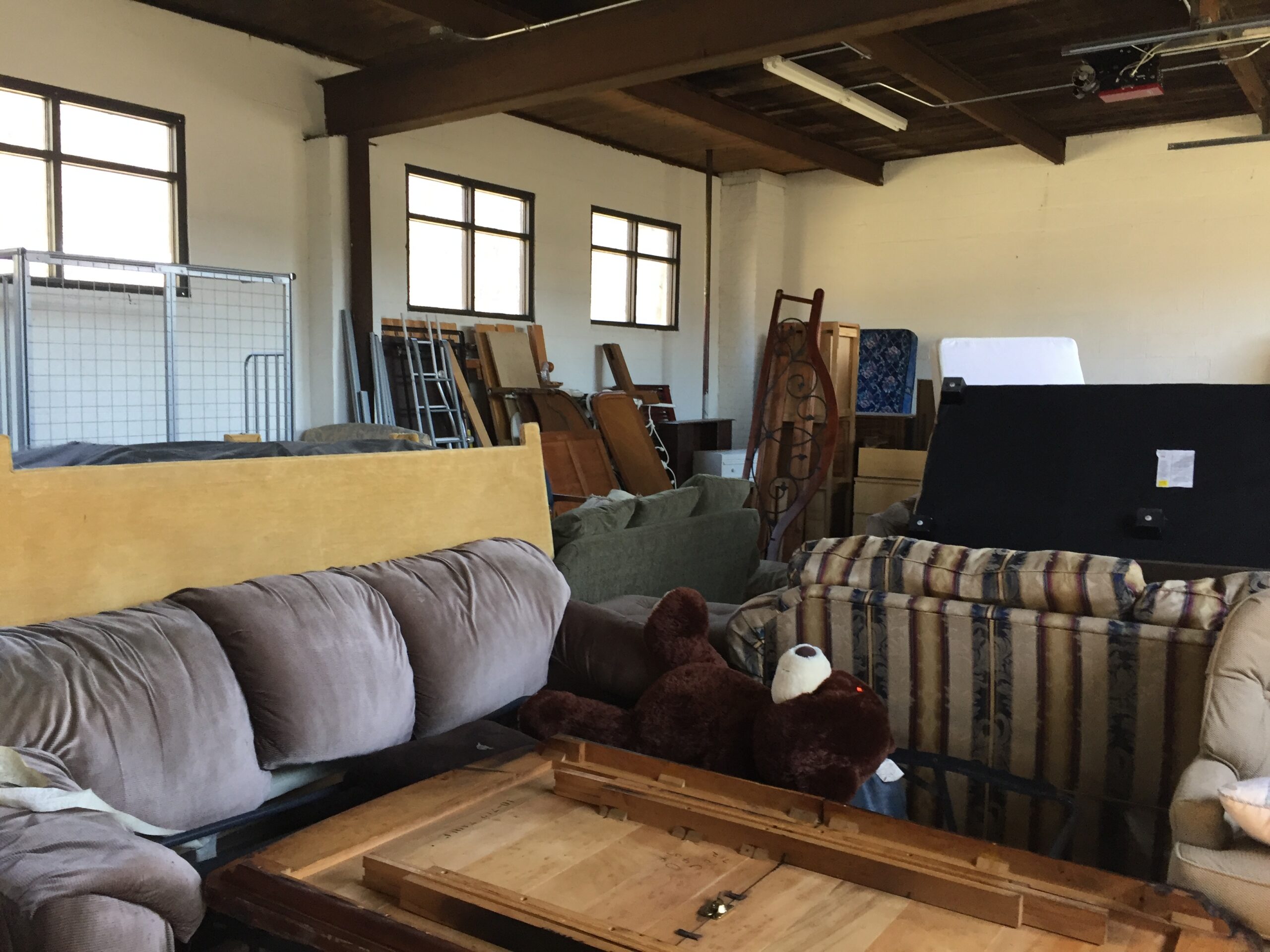
    Local congregations are developing a system to receive donated furniture and household items and distribute them to those who need it. In partnership with other local service organizations, Micah has secured a 2550 sq. ft. warehouse for storage and started putting together some volunteer teams to help with the collection and distribution.

    What you need to know about getting involved

    To let us know you have items to donate:

            + Call 540-693-0472
    + OR complete the online form 

    Pick ups are available primarily on Saturdays, but drop offs directly at the warehouse may also be arranged through the above contact.

    Most Needed Items:

    • Beds (frame, headboard/foot board and gently used mattresses)
    • Dressers
    • Sofa, Loveseat or Chair
    • Dining room tables and chairs
    • End tables and lamps

    To volunteer as a group or an individual:
    + E-mail or call Lori Yelverton; 540/479-4116
    + For more information about forming a team Furniture Bank FAQ

    The first pickups are scheduled for April 22 and 29. We are looking for groups that are willing to be available at least once a month. You do not have to have a truck to participate, but someone on the team must have access to one (this can include renting a U-haul–ask us for details).

    To make a donation:
    + Click the donate button above or visit
    Micah’s website directly.
    + Mail a check to P.O. Box 3277
    Fredericksburg, VA 22402

    Special thanks to Compassion Restoration, the churches of Fredericksburg and Stafford Schoolsfor helping this project come to fruition.

  • Putting the pieces back together

    Prior to 2005, people who found themselves without a home in the Fredericksburg region might have ended up in one of two shelters. If those programs were out of beds or the person had already outworn their welcome, they’d move into a tent, their car or other place not meant for human habitation. Without a way to meet their basic needs and problem-solve the simplest of situations, their crisis deepened, any remaining support unraveled and they knocked on the doors of the downtown churches as a last ditch effort to hold themselves together.

    The churches responded, as churches often do, by launching a number of outreach efforts–financial assistance programs, meal services, shower opportunities and so forth. But it quickly became evident that miscellaneous endeavors to support those on the street in their survival wasn’t going to alter their long-term circumstances. So, the churches got together, pooled resources, combined manpower and formed Micah Ecumenical Ministries. With the biblical call of Micah 6:8 in mind, the faith community has used the organization to strategically fill gaps for those who do not fit into other programs ever since.

    In the beginning, Micah’s work was very much a centralization of all the basic need services that the churches had been doing on their own. Showers, food, clothing and a person available to help people problem-solve was all the pilot program could muster. In time, however, the safe gathering space for people with no other options became a learning ground for the churches to dig deeper into the root causes of community homelessness.

    The years have brought many new responses to what we learned in that original space. As needs were identified, partnerships with other service providers emerged. Social services, the veteran’s administration, Rappahannock Area Community Services Board, Goodwill and others were soon offering their services directly from our central space. People who showed up in leftover scrubs with doctor’s orders to go “home” and get better inspired what is now an eight-bed shelter for those who have no where to stay after a visit to the hospital. Eventually it occurred to us, while everyone walking through our door came with a different story and varied problems, they all had the same diagnosis–a lack of housing. So we got to know landlords, put people in apartments and wrapped them with services so they could keep it. Naturally, a lot of the people we housed needed income and we tackled that too. A holistic income development program, now under Micah’s umbrella, offers job training, connects people to mainstream employers, makes possible the pursuit of educational goals and streamlines the disability application process as a last resort.

    It is these things that have brought our work beyond helping people survive on the street. Today, we are moving people from the street to permanent housing, and in that housing they are finding the stability and the support needed for their lives to be restored.

    In reflecting on the journey to this place, a long-time Micah friend in need said it well. “When all the kings horses and all the kings men can’t figure out how to put Humpty Dumpty back together again, he ends up at Micah.” The broken spirits we encounter can take a really long time to heal, but we like to think the services, relationships and hope available through our doors is the very thing that can overcome the most insurmountable odds to put the pieces back together again.

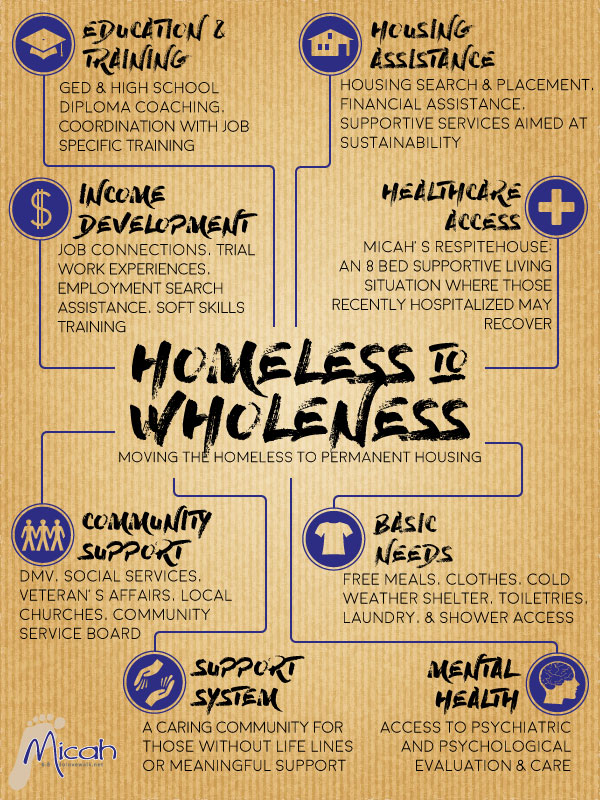
    For the next several months, Micah’s communication will focus on the eight areas the organization believes are necessary to successfully move someone from the street to permanent housing. The month of October will offer an overview of the series.


    overview-infographic-for-web

  • Forgiving–490 plus times

    In my line of work, people like to inquire about the point at which we ultimately give up.

    “How many times will you extend the branch of reconciliation, redemption, even forgiveness, before realizing a person is beyond it?” they often ask.

    And I’m never quite sure how to answer the question.

    Failure to identify a cut off point implies enabling, chaos and a willingness to be taken advantage of. Yet, a hard and fast description of process, procedure and the pivotal moment that the chances run out would defy every ounce of the unconditional love that my organization is founded upon.

    What I do know is that our scriptural forefathers struggled with the same dilemma.

    Many times in the Old Testament, we hear that God forgave the people three times before casting down His punishment. In Amos 1:3-13, the text even goes as far to say that “three” is that magic number of “transgressions” that will be excused.

    Jesus, however, had a very different take when Peter queried a similar point.

    “Lord, how many times should I forgive my brother when he sins against me?” he asks in Matthew 18:21-22. Being a good Jewish boy, raised on the clearly defined number “three” but wanting to be especially compassionate in the new covenant he was learning about, Peter then implies that answer may be “seven.” It is at that point Jesus clarifies that forgiveness should be extended a total of “seventy times seven”—490 to be exact.

    Although I interpret this story as a call to unending, relentless acceptance of most transgressions, I live in a world that more often finds itself stuck in the mantra of Amos 1—three strikes, you’re out. Therefore, I cannot promise the unwavering clemency that I wish I could.

    Straying from Christ’s hope for unending forgiveness isn’t necessarily the right response, but I too am human, complete with my own bandwidth and limitations.

    I was reminded of this most recently, upon receipt of a letter from the Rappahannock Regional Jail. A long-time friend in need had come to be incarcerated there, and he sought to make amends. Years prior, he had acted in such a non-compliant, malicious and disturbing way that I asked him not to return to our program until he could identify what he had done wrong. It was the first and only time I have led such a restrictive action.

    He stayed away for many months and I often wondered what had come of him. I hoped that my efforts to exhort a boundary had sent him in a direction of better choices, maybe even taught him a lesson. But my repentant heart worried I had closed the only door he had left.

    Certainly, his family, friends and others in his life had shut him out for the same reasons. But as a representative of the faith community of Fredericksburg, what was I saying about God’s love?

    Years later he turned up at our respite house, worn out, weathered and about to die. His condition had grown so critical that the hospital had given him 30 days to live. The only thing left for us to do was give him a place to die with dignity.

    While my sinful heart resolved this to be the consequences of behaving the way he did, the rest of me was crushed to learn what transpired in his time away.

    As I wrestled with my decision to follow Amos 1 in this case, God invoked the power of Matthew 18 and healed him. In the way that no medical analysis can truly explain, his body regenerated. He was given a clean bill of health, started a new job and moved into housing.

    Yes, he found himself in trouble again, and I cannot say it was any easier to watch him befall the consequences. But something about the miracle he experienced in our presence left all of us a little changed.

    My own epiphany, for example, was coming to understand how very little the act of forgiveness has to do with me and how very much it has to do with love of God and love of others.

    Believing that forgiveness has to do with the person who has been wronged implies that we have control over others actions—that we have a power bigger than even the forces of the universe can control. What an incredible burden to bear. Understanding forgiveness as a means of making right the relationships we have with God, others and the rest of creation is freeing. It lets us get out of the way, and let’s the power of God take over.

    So when my friend chose to write from jail with words like “I’m so sorry for disappointing my Micah family in the past” and “Please know that everything Micah has done for me was not in vein,” I had a lot to consider. He asked for my forgiveness, and there was a time that I would have hands down claimed he owed it to me. But in my coming to understand my role in the situation, I reached a very different conclusion.

    It is I who need forgiveness—forgiveness for getting in the way of God. My impulse to force consequences and protect my own interests defied one of the only things that God required of me, and that was humility.

    Humility is what keeps us faithful. It reminds us that we are not in control. And most of all, it keeps us focused on loving while God does his thing—490 plus times.

  • Bob Carr

    Bob Carr

    13315765_1265855316775790_7281659074613423862_n

    Bob has been volunteering at Micah’s journey office in the Hospitality Center once a week for about 6 years. Here is what he has to say:

    “About one year ago, I became a Servant Leader Coordinator through Micah’s 3e restoration process. The person I befriended lives in Micah housing and requires a lot of support. He is 20 years old, has kidney failure, which requires him to go to dialysis three times a week. I volunteered to help him as a friend primarily on Tuesday afternoons, following my volunteer hours at the Micah Hospitality Center. This time with him is sometimes challenging, fun and fulfilling. A couple of weeks ago I took him to the Hume-Lee Kidney Transplant Center at Virginia Commonwealth University in Richmond for a complete physical evaluation. This pertains to the possibility of his having a kidney transplant sometime in the future. Results from this evaluation are not complete yet. I don’t know how this possible transplant situation will turn out, but I plan on being with him each step of the way. Besides me, he will have to have a multitude of other friends to support him through his post transplant period.

    There are many good people at Micah, both full time staff and volunteers. One of the things I like about Micah is that it is ecumenical, with many different churches/people involved in every activity. This includes getting homeless people into housing, which is life changing for them.”