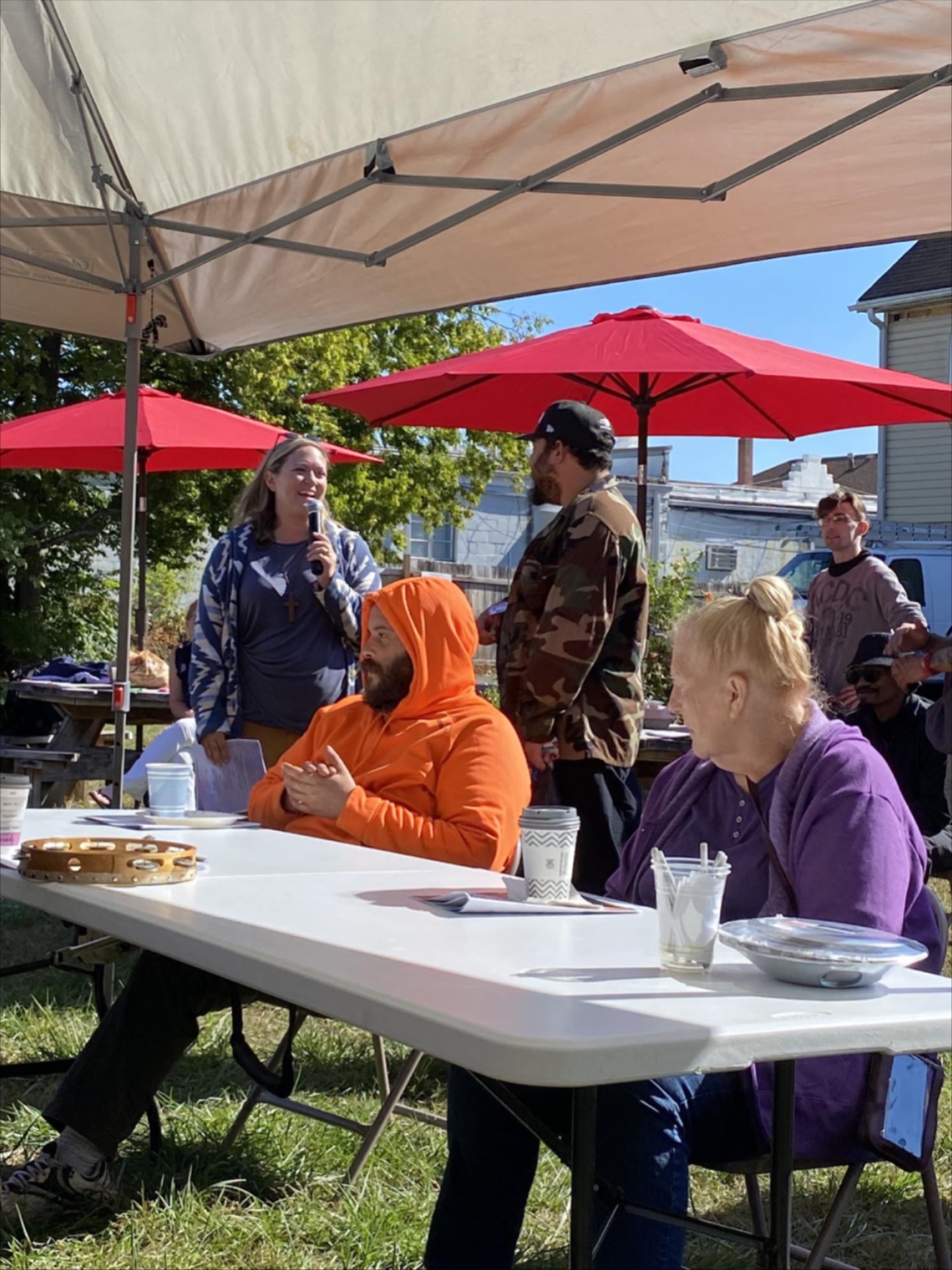
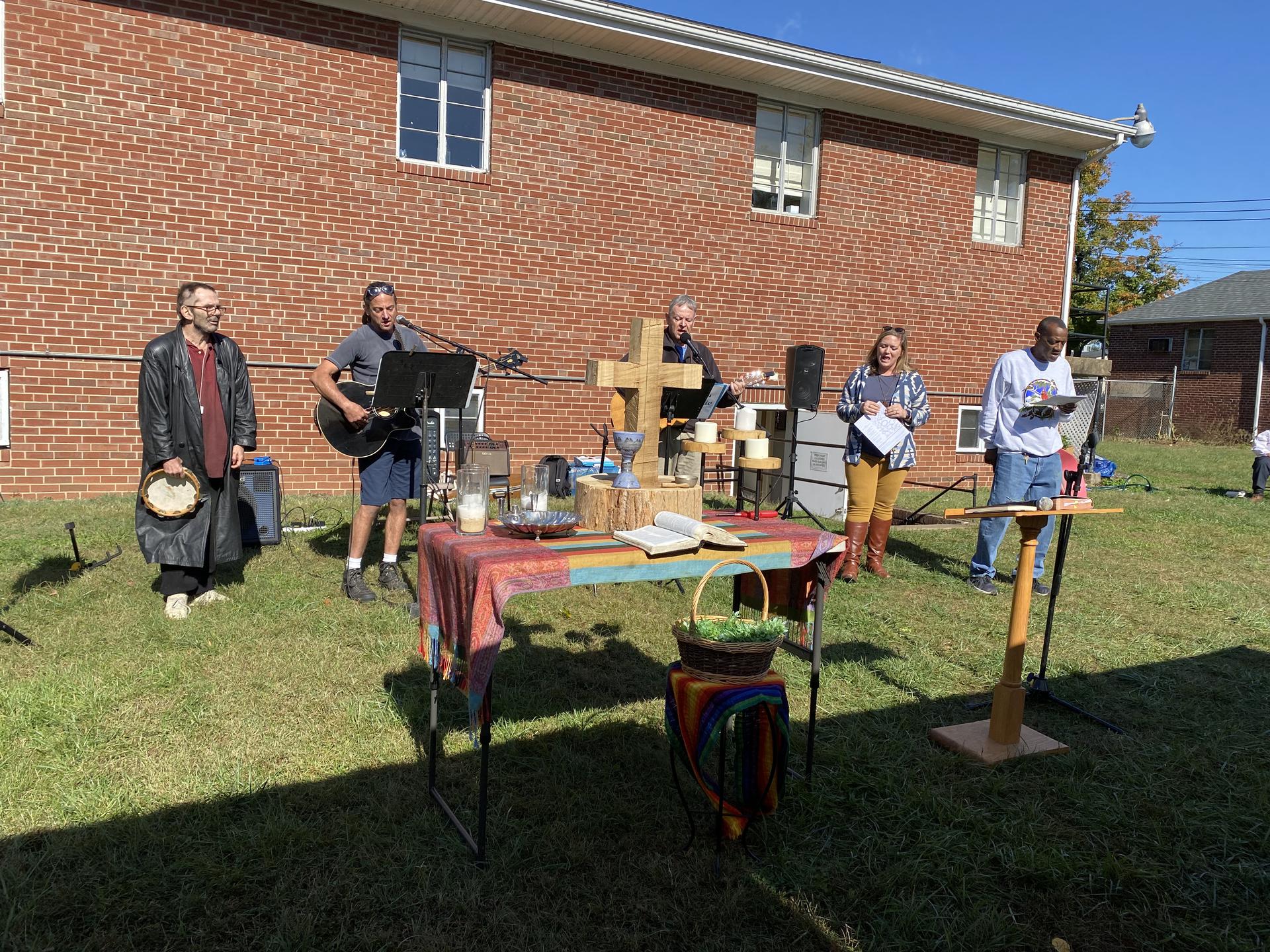
|
“God Sees Some Beauty in Me” #loveyourneighbor By Lisa “I came to Micah in 2007. But the first “person” that met [Micah] was Sandra Dee. Sandra Dee ran into Trinity Church, where Micah was originally located, the first time I came there. Sandra Dee was my road dog. She was my puppy. She didn’t ask to be out there, but she adapted. She ran right in [to Micah when we were having donuts in there. I was scared because I had never been homeless, and here goes Sandra Dee all up in there. Sandra would ride around in my purse when I was homeless. She went everywhere.
I had a career. I was married. I had a home. And then everything fell apart. I worked for Ruby Tuesday’s for 20 years. I became a waitress in 1999 and did a little bit of everything in the restaurant over the years. And then things got really bas out there in the real world. I drank because I didn’t want to be out deal with what was falling a part. And I was by myself.
I am a mother of two grown sons that are very professional and out there in the community doing their thing. I have seven grandkids.
I made a bad decision–my own fault. I consolidated homes with a man that I thought had a business, and it turned out he was a crackhead. There went my cars. There went everything that I had ever owned. There went my story–my photo albums, my kids stuff, my furniture, my car. Everything was gone and I was stuck. Then, when he stabbed me in the back I crawled out, landed on Sandra Dee and made it to a friend who came and picker me up. At first, I thought it was going to be a weekend thing. Then it became, I’m not even going back. I was just going to live my life. I didn’t want to deal with what the hell I had done. I didn’t know how to deal with it. I had never experienced it. I knew I was a failure, and that didn’t sit well. I couldn’t look myself in the mirror. It was a whole other life out there on the streets. I stayed outside for eight years.
Everybody tried to get me to come in during the winter and otherwise. I wasn’t going to come for no help until I was ready. I didn’t want to waste your time. I didn’t even come to Micah a lot, but I did because it was the only stable address and home that I had. I went from living in Lake of the Woods and having a home and a career to coming out of the woods and having people lining up on the guardrail until we was out.
There was a community among other people who lived outside. We had to make the best of it. I don’t consider myself actually as homeless because we had “shelter” and we had a fire pit and we had food; and we all worked together to make that happen. It wasn’t easy, but I kept everyone in line. They called me the “warden.” I guess I felt good because I needed somebody to need me. I needed their strength, even though they didn’t have much. The worst part was that being outside does things to a woman’s skeleton that ain’t supposed to happen. I ran mine into the ground during that time.
I just knew you had faith in me when I came and told you I was ready to work on things and come back indoors. I couldn’t let you down. Even though I’d fallen off the ship, walked the plank, a couple of times you still loved me and you still were there for me. And without that I couldn’t have made it. I had to make a decision and I told the rest of them “this is what I’m doing, you can come with me or stay here.” So, we all left and we all moved into housing together.
I’ve had three different arrangements with Micah, all with different people. I really needed to live by myself, but I was so afraid of being alone. Once I finally did get some place that I could live by myself, where people that care about me can come visit and then leave. I still get to be part of the community and that works for me. I just can’t go, I have a fear of being away from the community. I don’t have family. I just can’t even think of being alone without Micah. I’d rather go back to the woods.
Micah knows me. You met me in the worst time in my life, never judged me. You saw the good in me.
God and I have had our differences as I’ve walked this journey. We’ve argued quite a bit. There is nothing in my brethren that would be happening if He wasn’t walking with me. Now, I might get mad. Sometimes I don’t have a good day, but I don’t get mad too long because I look around me at the blessings that He’s given me and there isn’t any reason for it. He didn’t have to pick me up. God sticks with me though because He sees some beauty in me.
Micah’s vision for a Jeremiah Community is beautiful. I want to be a big part of it. I don’t want to be no where else. Most of us don’t even have a family, but we are doing the best we can. Most of us don’t want to be left alone. We need to be together where we understand each other. We’ve been through the same things. We’ve been out there, we’ve had heartbreak, we’ve had falls. Even if we are still fighting this 20 years from now, just being around people we can talk to that understand us and how we felt is important. I have a hard time going out the front door because I’m afraid of the public. I’m ashamed. But when those of us who have been homeless come together we can look at each other and be just the same. We don’t have to pretend. If I had people, like in the community, we’d go outside and sit in the chair and have coffee and be able to talk to each other because none of us are no better than the other. It’s hard when you come down and have to face the reality of the world that looks down on you, no matter what you used to be.
Don’t ever think you are wasting your time on anybody. We are good people that have a lot to offer. Just because we fell don’t mean we can’t get up; and we will always represent. We will be good people and we will learn from each other. We will cry. We will probably argue, not in the ways I used to like hollering or nothing; but we will probably have differences of opinions when we talk to each other about what we’ve gone through. But at the end of the day, we gonna go lay down in our little community house and we’re know we’re going to be there right beside each other the next day. And we won’t be alone. That’s the worst thing to me, and I know it is for others.” We hope you will receive Lisa’s story with loving kindness and meet her virtually using the button below. As you join us in thanking God for Lisa’s perseverance, we ask you to prayerfully consider how you might honor him and others in the Micah community with a gift of time or monetary offering. Lisa is one of many neighbors that our collaboration of churches has learned from as we have followed God to build the many parts of a “house” where “all are welcome. Commit generously to Micah this year, and help us bring more neighbors home. VIDEO: A conversation
|
Category: Word on the Street
-
#loveyourneighbor: God Sees Some Beauty in Me
-
Word on the Street: Cast Your Net
Some years ago, there was a legendary homeless man by the name of Lonnie Coe. Lonnie was the guy you went to when you got out of jail and had no place to stay. He would help find a place to set up your tent. He’d teach you how to sell your food stamps and “fly a sign.” And he’d make sure you knew the secret “whoop, whoop,” that announced you were a safe person entering the campsite.
If you found yourself a few dollars short on a soggy, rainy night, it was Lonnie who’d round up the crew and put the days change together so that everyone could pile into one run-down, hotel room and stay dry for the night. Lonnie didn’t take well to shelters. Vietnam took his mind. Prison made him avoid closed-in spaces. And loss after loss of friends and family left him pretty selective about his people. But if you were one of Lonnie’s people, after his 20 or so years without a home, there wasn’t a thing he wouldn’t do to see to it that you made it through the long, hard nights on the street.
Then, Lonnie got sick. His feet swelled up. His organs started to malfunction. And he was literally crawling out of his camp in the woods, struggling to meet his own needs and in no shape to help anyone else. It was that night that little Peg Phillips—who was homeless herself at the time—helped me carry 250-pound Lonnie Coe into a hotel room. She would stay with him and care for him. And in the coming days we would work together to get a wheelchair for his friends to push him around town.
This is the scene, or at least one of them, in which our downtown churches entered relationship with our homeless community in 2005. It was the deep, deep water of a people forgotten, written off and given up on by every other system of support, including their own families. I was barely 25 at the time and largely unqualified to be shepherding Peg and Lonnie—both 20 years my senior—to anything of significance. But knowing what I know now, that night we carried Lonnie into the hotel room was a pivotal moment in understanding exactly what our churches had been called to do and who was going to teach us how to do it.
Luke 5:1-11 uses a tired group of fisherman who meet Jesus on the banks of Galilee to ask us introduce what being called actually means. It feels so unnecessary and demanding of Jesus to ask the professional fishermen to cast their nets one more time after being out all night and catching nothing. Simon Peter had already emotionally prepared to go home and report to his family that his many hours of labor were fishless. Imagine his whiplash when following Jesus into the deep water yields so many fish that not just Peter’s family, but the whole community could eat for weeks. Not unlike Isaiah’s reaction to his own calls, Simon Peter cowers in unworthiness. “Go away from me, Lord, for I am sinful man,” he says. Jesus will have none of it.
Instead of pushing Peter away, he invites him to come closer, to trade the messiness of fishing for the messiness of getting involved, personally and meaningfully with God’s people. What I know NOW about the night that Peg and I carried Lonnie Coe into that hotel room is that God’s most profound and wonderful call is affirmed through providential tour guides. They show up in the most unnecessary and ordinary. Their presence among us can sometimes be so subtle, unusual or even disruptive that we might even miss them. Yet, if we let them, these are the people who will hold our hand as we wade into the deep waters of our world. The privilege of being in relationship with them is what erodes the landscape of our hearts and forces us to relearn everything we thought we already knew about loving God and loving neighbor.
As it turns out, Peg was exactly what that scared quarter-lifer needed all those years ago to even begin to know how to care for Lonnie Coe. Alcoholism and divorce may have left her on the streets for five years, but even in her homelessness, she was still a graduate of the University Alabama nursing program who ran three critical care units at the peak of her career. In addition to her medical training, Peg was a mother and a homemaker. Her housing status in that season of her life had nothing to do with what she had to offer.
Peg has long since emerged from homelessness. She bought a Habitat House. She restored her nursing license, and she overcame many of barriers that remind her of that difficult time. Best of all, she has grown to be a key leader at Micah, overseeing our housing ministry. She continues to be a providential tour guide for our deep-water endeavors, each and every day.
But there were others, like Lonnie Coe, Mike and Pee Wee Cooper, Cathy McCullough, Cindy Hughes, Michael Hill, whose names reverberate in the hearts of this community long before there ever was a Micah. Their names mean something because our genuine connection with their stories called us to do more, to go deeper.
Chaos is a nice word for the season in which God planted the mustard seed of Micah in the hearts of our churches. At the time, chronically homeless neighbors, like Lonnie and Peg, had been vilified and excluded from other programs in their community for their perceived social struggles. Yet their exclusion quietly inspired the churches of Fredericksburg, one by one, to a radical inclusion.
I thank God we have always had churches willing to wander into the deep water of this community, not just to rescue the people lurking there, but to listen and learn how God might be using them to teach us better ways to fish.
Many a prophet, Amos, Ezekiel and Jeremiah to name a few, have spoken of fishing techniques in their conveyance of God’s desire for humanity. Catching people was never about saving souls or getting more bodies in the pews. It was never about ending homelessness or solving any other social problem. It was always a fundamental pursuit of “shalom.” That making right of relationships with God, self, others and creation is a state of being that cannot be achieved for any of us until the most left out, unqualified, least desirable member of our world experiences it. And we don’t have to know what will come from that deep water, or whether it has fish at all, to enter in it. We just have to cast our net.
-
#loveyourneighbor: My Purpose is to Serve
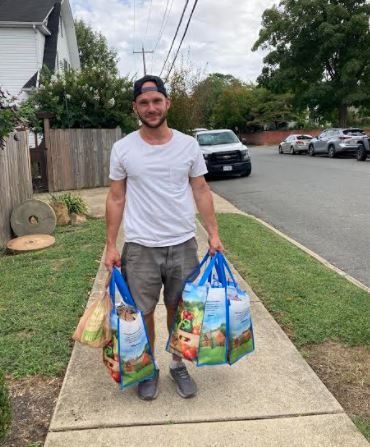
“My Purpose is to Serve”
#loveyourneighbor
By Chris
“I’m pretty much raised in this area. I went to school in Stafford County. I graduated from Brooke Pointe in 2004 and joined the military for a couple of years after that. I traveled all over the state. In between, I dealt with many years of homelessness. Thankfully, for the first time in a long time I actually have a stable place to live and it has been a big transition for me. I’m 35 years old.
I had a pretty normal childhood. I was an adopted child. I never met my mother and father, but I wasn’t ever very close with my adopted family. I am still not all that close to my adopted family. I’ve gone many many years without speaking to them because of me and my behavior. With my substance abuse and alcohol problem and my chronic homelessness, my family was very upset with me about the lifestyle choices I had made. I was just walking down the wrong path.
I was always that extreme kind of kid. We did all the crazy stuff like riding dirt bikes, four-wheeling, jumping ramps, extreme stuff–always seeking that adrenaline rush. A lot of us carried that with us when we went into adulthood. I joined the service right out of high school. I was ready to be gung ho, and a lot of my other buddies went off to do some pretty wild careers.
I was in the army a couple of years. I had been struggling as a juvenile. I became homeless for the first time when I was 17 years old. It was the first time I had no where to go. I saw a commercial on tv saying, “join the military” and I said “hey, I’ve got nothing to lose,” so that’s what I did. I was only in a little over two years. I received a medical discharge for mental health, and that’s when I started drinking alcohol pretty heavily. I had a lot of issues. I was still growing up. Mentally, I was still very young.
After I got out of the military, my life took a serious turn for the worse. The alcoholism continued. The drug abuse started to increase. I was home for a very short amount of time, and I ended going to prison for two years because I wasn’t able to control my behavior.
As I look back, you know they say hindsight is 20/20, but when you are going through a circumstance that doesn’t seem quite fair to you, you can make a million excuses–bad luck, wrong time, I didn’t get the right opportunity; you are going to point your finger at a million different things as to why I didn’t catch a break until you really start to see that these things are reoccurring no matter where you go. You come to the realization that it’s not so much my circumstance, but it is me, myself that is causing all this grief.
It took me to see that unless I was willing to change who I was, the same things were going to keep happening over and over again. So, I had to say “Chris, you can live in this viscous cycle the rest of your life or you can make the decision to change.” So, I choose to say I am not going to put drugs or alcohol or anything else in my body that isn’t going to help me. When I finally decided to quit drinking my life has taken a radical change in the right direction.
When you do decide to make a change in the right direction, you start to see who is there for you and who is there against you. You start to see things clear for the first time, and you realize who is on your side. The church was there.
When you live outside with other men and women who live outside, you develop a dependency and a reliance for them. It is like a family, just as close as any blood relative you could have. When you have a buddy who sleeps with you outside no matter how cold or hot it is, you look after each other. There is a strong bond that develops. There’s common denominators when it comes to people who are homeless or chronically homeless; and that is lack of social support. I didn’t have a family that was willing to help me in my time of need, and so I relied heavily on my brothers and sisters on the street. It is a label, people will place a label on you at that point. (I.e. this guy has a back pack, he looks a little dirty). Now, you are that homeless guy. It’s hard to break that label when someone puts that on you.
I believe God had a purpose for me, and he was waiting patiently on me. He had a calling for my life and I wasn’t fulfilling it. So, he let certain things happen in my life to get my attention. I have always had a deep compassion, almost indescribable passion to help those specifically who have an inability to help themselves–a burden that keeps them from even completing menial tasks. The God given gift inside of me is activated when I see someone who might not even be able to walk and might need assistance.
I’m coming from the perspective of how I felt [on the street]. I just want to go to them, and like I said, help them feel wanted and needed. My purpose there is fellowship and friendship, I’m not just meeting a stranger. I know from experience, what it is to go without. A lot of times when you are in a tough spot, you don’t really even acknowledge your basic needs any more–the need for hygiene, the need to dress properly in the weather. You put those to the side, unfortunately; and you go without, in a sense. I know, for instance, it is difficult to find jeans in men’s sizes that actually fit you. So, one of the ideas I had was working to collect new jeans in various sizes, so that we will always have the size and the kind of the person who needs them. I got some of the churches in the area involved and asked for donated jeans and we’ve been successful with that.
My purpose is to serve. I genuinely care. It is my God-gifted ability to share compassion towards people. I am very thankful for that. It is my calling. I just pray that the Lord uses me in a mighty way. I want to do great things for God, and I just pray that I have a willing heart to be obedient to Him and to answer when he tells me.”
We hope you will receive Chris’s story with loving kindness and meet him virtually using the link below. As you join us in thanking God for Chris’s compassion and calling, we ask you to prayerfully consider how you might honor him and others in the Micah community with a gift of time or monetary offering. Chris is one of many neighbors that our collaboration of churches has learned from, as we have followed God to build the many parts of a “house” where “all are welcome.”
Commit generously to Micah this year, and help us bring more neighbors home.VIDEO: A conversation
with Chris -
#loveyourneighbor: We all fell short at some time

We all fell short at some time#loveyourneighbor
By Jimmie Joe
“My name is Jimmie Sanders, but everyone called me Joe since I was a little boy. I was born in Memphis, Tennessee in 1952. I have nine brothers and two sisters. We came up struggling, but at that time we didn’t know any different. Once I got of age, I could pretty much put things in perspective how hard things were. I got married in ’75. I have three sons and one daughter. I went into the Marine Corps in ’79 and stayed for 14 years. As I got out I ended up here in Virginia and that’s where I’ve been the last twenty years on and off.
I didn’t too much have a childhood, as far as getting out and playing with other kids. My mother, she relied on me a lot, even though I was the third oldest–watching my brothers and sisters. I really didn’t have the chance to adventure out to have the fun that other little kids would have. By me being able to watch my siblings, I learned a lot about how to care for others. From day to day we had to make ways to have food to eat. My mother, she worked as a house maid for white people. What she made for that day is what we had for that day, and she would stop at the store and get groceries. We made ends meet, and there was a small community around us where we always had help as well.
I ended up getting on the wrong foot, and I did something crazy that I shouldn’t have done. I ended up being incarcerated for about eight and a half years. While in there I decided to change myself around. I got baptized in there. From then on I tried to stay on the straight and narrow. Then, when I got released I had never been introduced to being homeless. I was frantic. I didn’t know what to do because I had never faced anything like that. Someone pointed me in the direction of Micah. Since then, I have been well blessed. Micah has played an integral part in my recovery from being homeless.
It’s very humbling because I remember where I were. I remember to where I had gone, and there was a brick wall there. Now, that brick wall has been removed. I had a good job. I was a truck driver. I was doing good. But once that is all gone, reality hits you. Personally, I think one wrong outweighs a thousand rights. I had many wrongs. I was able to reflect back on that, and that’s when I decided to change my life around and try to get my life back together, and be a mentor to others. I guess that’s what God calls me to do.
God has been present in all avenues of my life. I am very humble. I am slow to speak when there is anger around. I find myself that I can tell someone whether they are wrong or right without having to stir up strife. In the past it wasn’t like that. God has really made me humble. I ask him all the time to keep me humble–to give me the words to say, not the words that I want to say be the words I need to say.
Micah has been a great support. Everyone in the house where I live–people who I was on the street with–we have been supportive of each other. Working with the different church groups each Saturday, through the furniture ministry, is also a support group, as well. It gives me a sense of pride, a sense of hope and a sense of wanting to help others because I was helped. I don’t waiver when someone needs help. As a community that’s what we should be able to do because the Bible says “don’t put off til tomorrow what you can do today.” That’s what God has put into my heart. I could easily say no, but why. I still remember that I have been helped. I had to call on someone to help me. If I’m able bodied I’m going to do it. I could make excuses not to do it. A person spends more energy making excuses not to do something, than to do something. That’s how we should be able to work as a community.
Even though someone may do something wrong, you still love that person. You don’t condone what they did, but you still love that person. You can’t continue to throw up in someone’s face what they did, and then say “I love you.” That’s not love. We all have to remember, we all fell short at some time. We love that person and unconditional love, you don’t continue to bring up stuff like that.”
We hope you will receive Joe’s story with loving kindness and meet him virtually using the link below.
As you join us in thanking God for Joe’s perseverance and humility, we ask you to prayerfully consider how you might honor him and others in the Micah community with a gift of time or monetary offering. Joe is one of many neighbors that our collaboration of churches has learned from as we have followed God to build the many parts of a “house” where “all are welcome.” Commit generously to Micah this year, and help us bring more neighbors home. -

#LoveYourNeighbor: Getting Proximate
#Loveyourneighbor
I have two children.
The depths of love I have for both of them is deep and wide and by all intents and purposes equal.
Yet, the ways in which I, as their mother, am called to care for them are drastically different.
The three-year-old is quite possibly developmentally advanced. He has a sharp eye for puzzles. He practically packs his own lunchbox, picks out his own clothes and usually reminds me when and how we are supposed to do things.
The nine-year-old, while wicked smart, struggles deeply. He can rattle off the most insanely fascinating facts about outer space, prehistoric time and the best strategy to beat the latest game he’s playing on his iPad, yet he falls apart on simple tasks. He cannot articulate his feelings. His obsessions keep him from moving quickly from one thing to the next. And sometimes, he frankly struggles to leave the house.
I share this because it is my growth as a mother that has most opened my eyes to the ways in which God relates to humanity. Paralleled against the years that I have worked with our churches to care for unhoused neighbors through Micah, I am especially challenged by what my parental learnings have revealed about those who might not fit neatly into the systems and structures the world has created.
I imagine that many of us, through some familial bond, can resonate—loving our children, siblings or even members of a close-knit group of friends in immeasurable ways. Yet, these relationships teach us that different kinds of support in various seasons of life are often necessary for each person to function at their fullest potential.
It is a lot easier, in spite of differences, to see those closest to us as one unit. It is when we get into the broader parts of community, where we encounter neighbors we do not know, that it becomes challenging to appreciate that those with different circumstances still have something to offer.
Paul writes in his letter to the Corinthians that all members of God’s family are equally necessary for the body to flourish. The hand needs the eye. The head needs the foot. And the body is not the body without equal recognition of its parts.
In a world that measures value on educational degrees, annual salary, contribution to the tax base, possessions and hours worked, where does that leave people whose contributions might look different because of disability, age, housing status, health, trauma or other narratives effected by race, class or gender inequality?
Don’t misunderstand: This curious question is not aimed at making us feel bad for being a really good body part. God wants prosperity. God wants success. But God, the parent, wants that for each and every member of the family.
Paul says “The members of the body that seem weaker are indispensable.” That means they are absolutely necessary. And therefore, we are to offer greater care and respect than we might even expect for ourselves.
It is because we are a stellar appendage of the body of Christ, that we have a mission and call to work that much harder to create a world that functions just as well for parts of the body that may experience it differently.
If someone is suffering, we are all suffering because we are each an equal part of the body. We cannot live into the fullness of who God created any of us to be; and we cannot be the stellar appendage we might even think we are, if our nose is bleeding, our eye is scratched or our hand is broken.
Bryan Stevenson, a lawyer and founder of the Equal Justice Initiative, is known for spending a lot of time with death row inmates—a part of our society that could not be more disenfranchised and disconnected from the whole.
We have to “get proximate” to people who are suffering,” Stevenson says. “If you are willing to get close to people who are suffering, you will find the power to change the world.”
There is no coincidence that God arranged humanity as many parts of one body, in ultimate proximity to one another. It is the pursuit of that proximity that allows us to know and feel the suffering of appendages that may not be functioning as well.
Getting proximate, however, is not just a matter of visiting a struggling body part and offering an assistive device so that WE can get back to being the amazing body part we are. It is a lifetime of moving in and out of care for one another, and recognizing the intrinsic value of what each member contributes.
Take, for instance, the “proximity” embraced by our downtown churches all these years as we have welcomed people into our buildings for food, clothing, showers and relationships. The things we have accomplished together through Micah Ministries is a fundamental acknowledgement of what can happen when the body recognizes the sum of its parts.
Truth is, caring for our neighbors who find themselves without a home is not so different from the creative ways that any of us might seek solutions for the different needs of our own children.
And our neighbors are somebody’s child, as well.
For whatever reason, as adults they have experienced a profound catastrophic loss of family and other supportive relationships that might have otherwise kept them out of homelessness. When they run out of relationships they live separated from society, exiled to a place of judgement, distress, and uselessness.
If we do not pursue them, they remain disconnected from the body. And not only do they suffer, but we all suffer.
For many in our homeless population, a stint in a shelter or on street will be a brief tragedy in their narrative. They will overcome it and it will never happen again.
There are others, however, who will end up on the street and remain physically, mentally, emotionally and/or spiritually homeless for the rest of their lives, unless we offer a permanent, long-term option where they can settle, heal and rebuild their lives on their own time and with support.
I would like to think that if my own children or anybody’s children–the parts of our body–were to find themselves in such a position at any point in their lives, we would be the kind of community that embraced the different needs of all God’s people and had a solution prepared for the very least among us.
For just as the body is one and has many members, and all the members of the body, though many, are one body, so it is with Christ.
~Corinthians 12: 12~
Join our Team
Looking for an opportunity to literally end homelessness for neighbors moving off the street or our of shelters and into housing? Our community needs someone with tenant agent skills to build relationships with landlords, find units and help move people into safe and stable homes. APPLY NOW to be our community’s housing locator.
-

#LoveYourNeighbor: How our neighbors lead us
How our Neighbors Lead Us
#Loveyourneighbor
On January 17, 2021, Street Church gathered on a cold January morning and celebrated its first baptism of our friend, Sue. It was a joyous occasion, one that will forever live in this pastor’s mind as a mountaintop moment of faith. On this day, Sue professed her faith and joined the family of Christ. Over the last year, she has showed up week after week to share her gifts living into the commitment she made on that day.
Through her spiritual gift of hospitality, and her love language of baking, she has blessed us immensely with birthday cakes, pastries, and other goodies throughout the year. Often, she serves as a liturgist reading our scriptures and prayers, sharing her voice with the congregation. Sue also does behind-the-scenes work for Street Church, helping to coordinate bus rides to services. She has cared for her community by sharing what she has, and she is an exemplary model of what it means to show up as a disciple of Christ for the church and the community.
"Bear," another one of our lay ministers in the community, shows up weekly at 8:30 AM to open up the doors of the church. Every Sunday, he gets the coffee started and makes sure the lights and the heat is on. He is the first person the meal groups see when they prepare meals for Sunday morning, and he is the last one to leave the building each Sunday. "Bear" has grown over the last year, as he has learned what it means to lead for the sake of Christ who is at work in us. As one of the original neighbors to help us gather folks around scripture, he is an example of the way that we grow from one spark to a flame.
While this past year has brought a lot of loss for our neighbors, some have used that grief as a motivation for change.
Our friends Chris and George have overcome so many struggles. Yet, they have remained active in our ministry, ensuring that the worship service flows smoothly with setup and tear down. Despite their struggles, they used the legacy of friends lost as a motivation to transform their own lives and work towards sobriety. It has not been an easy battle, but one that has brought them to a place where their leadership shined during the surprise winter storm last week. It was those two who made it possible, at a time when roads were impassible for many staff and volunteers, to opening up the Day Center to make sure that folks would be cared for during the impactful snowfall.
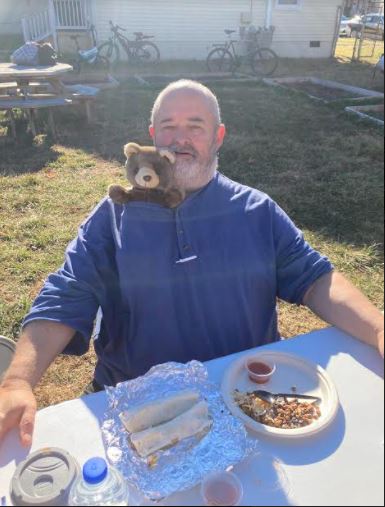
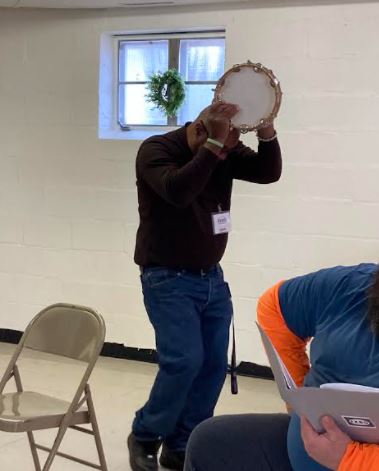
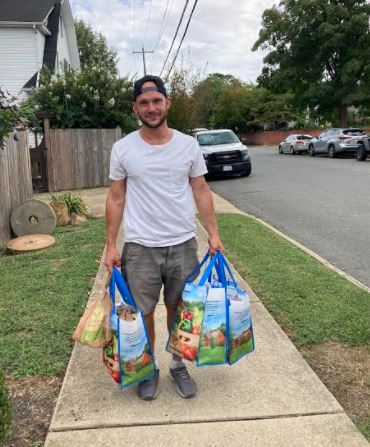
George even stepped in when a couple, whose tent was smashed by a tree, needed a ride to a nearby hotel where we were providing shelter. We panicked for a minute, as he was low on gas and, of all times, we couldn’t find a gas card in the whole building!
Luckily, we had Sunday’s Street Church offering on hand, and there was money available to help George with what he needed to safely transport them.
Recently, Chris has also been using his gifts to lead our neighborhood outreach mission. He has big visions for connecting with neighbors and helping them know that Christ is with them through his presence and resourcing in the neighborhood.
Both men have come so far and God will continue to use them to lead us ahead.
There are many other neighborhood examples of those who have come though the trenches and risen above the noise. I had the opportunity to take one of our friends, Marvin, out to lunch for his birthday, where he shared with me his hopes for this upcoming year. This was such a big deal for him, considering where he was just a year ago when I met him. Rachel has mourned deeply for close to a year after the tragic loss she faced. Regardless, she and her significant other have persevered with their start-up called H.O.P.E Cleaning. Rachel also hopes to help us start a Micah Street Church women’s ministry in the new year, starting with "Gal-entines Day 2022."
Advent 2021 was a brilliant display of how our community has grown since last year. We showcased the FXBG Street Choir at "A Street Church Christmas" in Market Square and joined our community in song as we kicked off the holiday season. We shared in a communal lament when we honored the 31 lives we have lost this year in our community as we held a neighborhood vigil for Homeless Person’s Memorial Day. On Christmas Eve we celebrated the joy of the season as we brought the nativity story to life and rejoiced in Christ’s birth among us.
The beautiful thing about this community is that as we continue to let our neighbors lead us, we see God in the ways that they are showing up for one another. As we gather, sow, and grow, the spark is lit just a little further as they teach the community what it means to lead by example. Their experiences have shaped them in a way that gives them a unique perspective and gifts to serve.
This past Sunday we celebrated another baptism and I can’t wait to see what story God is writing for our neighbor who has recently "joined the family," and how God will lead through her next…
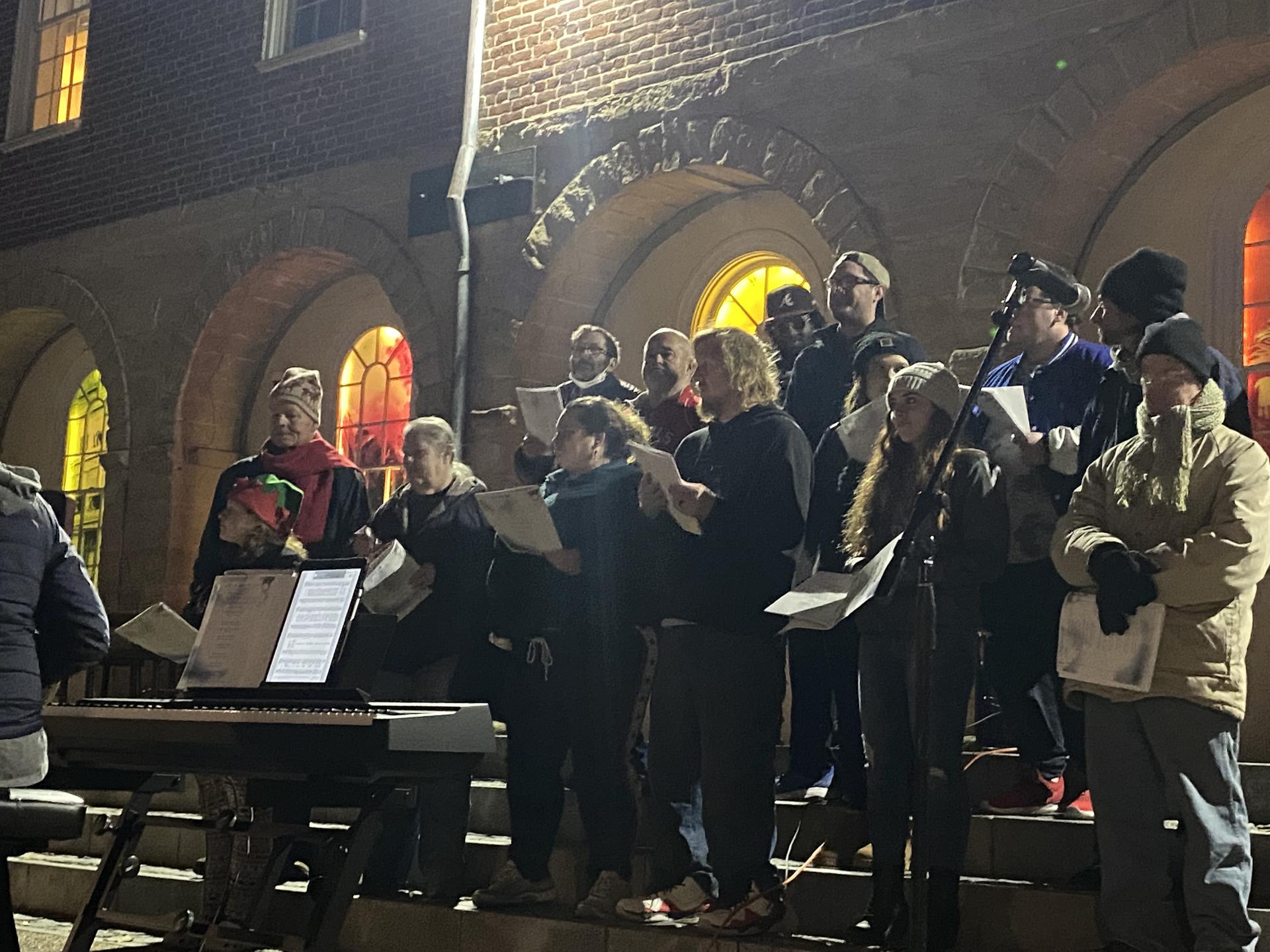
The beautiful thing about this community is that as we continue to let our neighbors lead us, we see God in the ways that they are showing up for one another. As we gather, sow, and grow, the spark is lit just a little further as they teach the community what it means to lead by example. Their experiences have shaped them in a way that gives them a unique perspective and gifts to serve.
This past Sunday we celebrated another baptism and I can’t wait to see what story God is writing for our neighbor who has recently "joined the family," and how God will lead through her next…

Chelsea Morse
Community Ministry Chaplain
Micah Street Church
chelsea
Join our Team
Looking for an opportunity to literally end homelessness for neighbors moving off the street or our of shelters and into housing? Our community needs someone with tenant agent skills to build relationships with landlords, find units and help move people into safe and stable homes. APPLY NOW to be our community’s housing locator.


-
#LoveYourNeighbor: The Liminal Space
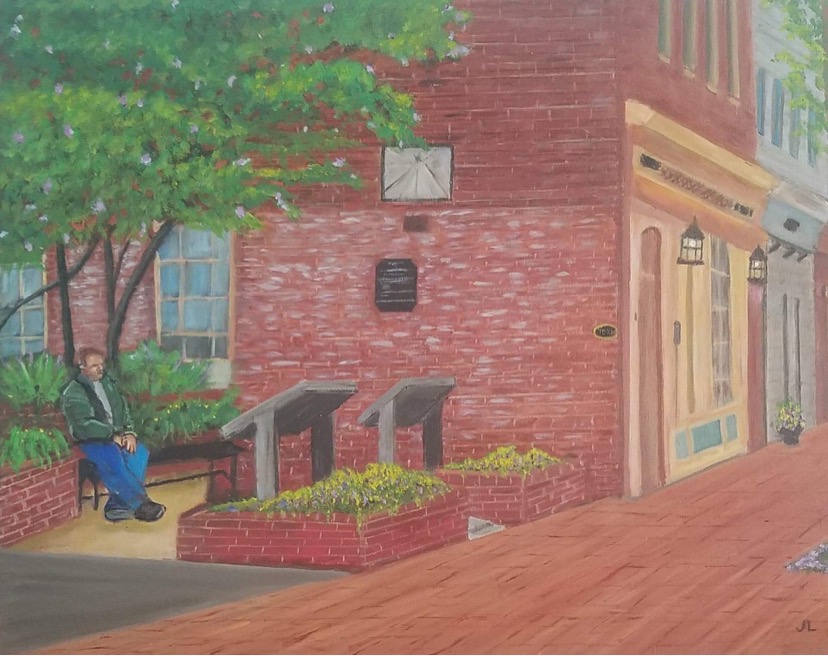
Painting of Jeremiah at the Visitor’s Center by Judy Lowman
The Liminal Space
#Loveyourneighbor
I stopped three times before I finally found a shop still serving coffee last Christmas.
Notably, it was late in the evening when I chose to venture out after our family dinner. I had an important visit to make, and it was far too cold to show up without coffee.
My friend was in his usual spot, perched on a couple pieces of cardboard under the Galleria overhang. Nothing but the twinkling lights of downtown Fredericksburg spoke into that quiet winter evening, as we sat and sipped our coffee in silence. Not traffic, pedestrians or typical city noises pierced that lonely Christmas night.
“You know, tonight would be a really good night to go indoors,” I finally interrupted.
“Oh,” he chuckled. “I’m ok. I’m ok.”
We sat longer together, few words exchanged.
As I got up to go, I left him with the same offer many of us had given each night for the previous six months.
“There’s an apartment waiting for you Jeremiah. We all love you, and we hate that you are outside, especially on Christmas” I said. “I’ll take you there whenever you are ready to go.”
He nodded kindly and went back to carrying on with the voices in his mind.
I left without him that night, as I had many other nights since our ministry committed to renting a place and working as long as it took to get him in it.
It wasn’t exactly a surprise that he would turn me down. Our efforts to build relationship with Jeremiah, to care for him and get him back into housing had gone on for 27 years.
Somewhere in between his graduation from North Stafford High School in 1989 and the day he showed up homeless on the streets of Fredericksburg, he joined the army, served in Germany and changed his name three to four times.
While the surrounding details are largely missing with regard to the actual circumstances that brought Jeremiah to the street, his time outdoors and presence downtown made him a regular legend in our community. No matter how many people our ministry had shepherded off the street and lives we had seen restored, Jeremiah was always the one people wanted to know, “what we were going to do about.”
Years ago, it took many months of hiding lunches in a dumpster for him to trust the churches enough to attend a community meal. It took a lot of creativity to navigate him through the complex systems that issue identification, medical insurance and disability income. Likewise, getting him back into housing and engaged with appropriate support would be no small task.
Then, on the eve of an oncoming snowstorm, at a time when pandemic made congregate shelter an impossible offer, there was the night that he said “Yes.” He would go with me to sleep indoors at the apartment that had been waiting for him.
It was a little more than a month after my Christmas visit. It was my turn again to check in on our friend. Admittedly, I was quite exhausted from the day’s events. Fully expecting the same rejection, I almost didn’t stop. But on the slim chance my friend might choose a warm, dry bed vs. the snow on the way, I went anyway.
I found Jeremiah and about five others at the visitor’s center. He turned me down immediately and I went over to talk to the others for a few moments.
“Are you sure you won’t come with me,” I said once more before I left.
“Where exactly is it,” he said. I described the location as I tried to control the heart beats that had then leapt into my throat.
“Ok. I’d like to give it a try,” he said.
Jeremiah would help me make his bed that night. He would wake the next morning on his own time, not when the plow trucks rolled down Caroline St; and he would watch the snow fall through a window. Weeks later he would shovel his own sidewalk, wash his own laundry and wheel his trash to the curb.
Spring would come. He would help his neighbor mow the grass and his case manager to hang a bird house in the back yard. He would walk to the corner store and return. He would heat his own meals and tend to his own room.
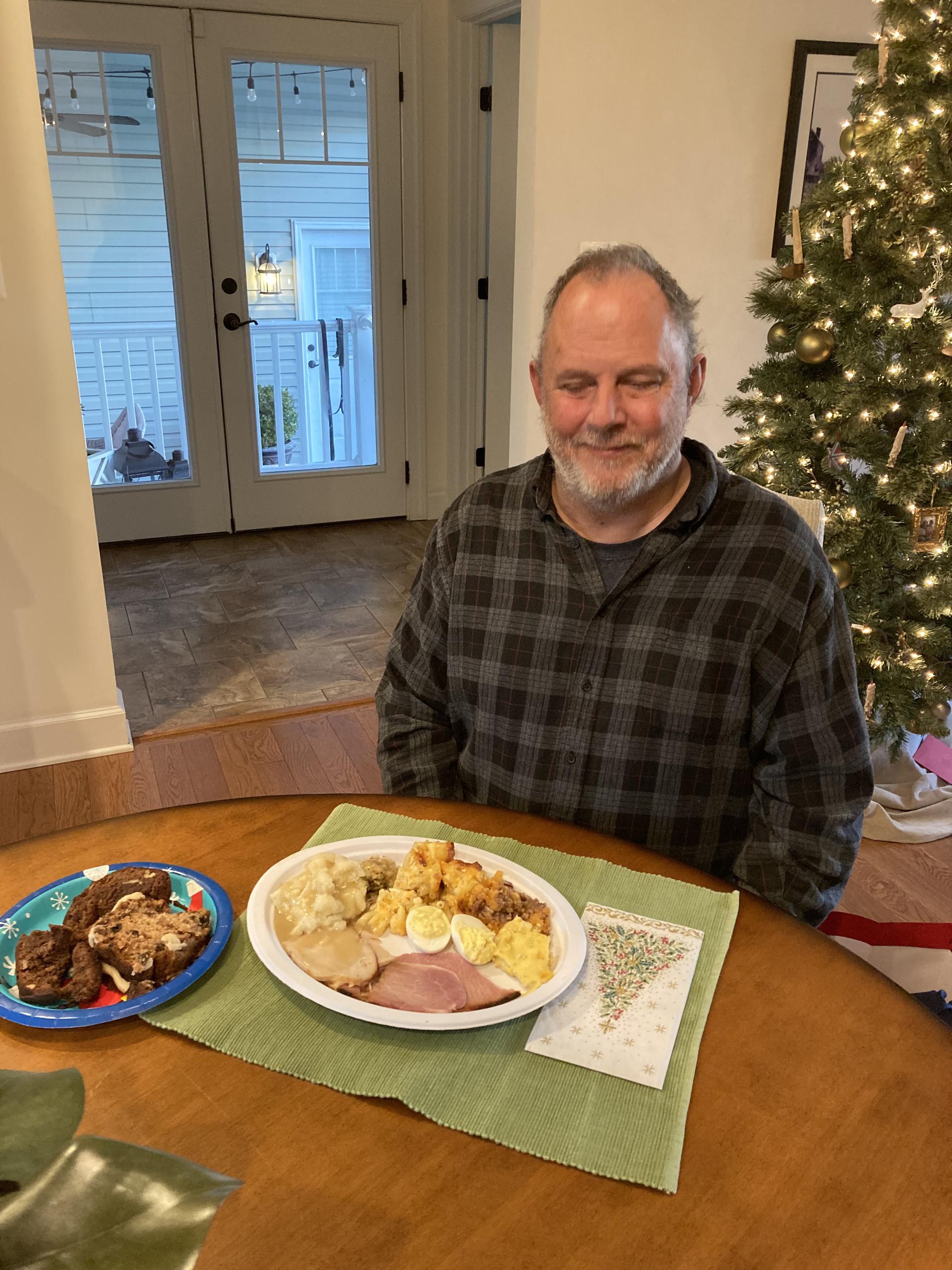
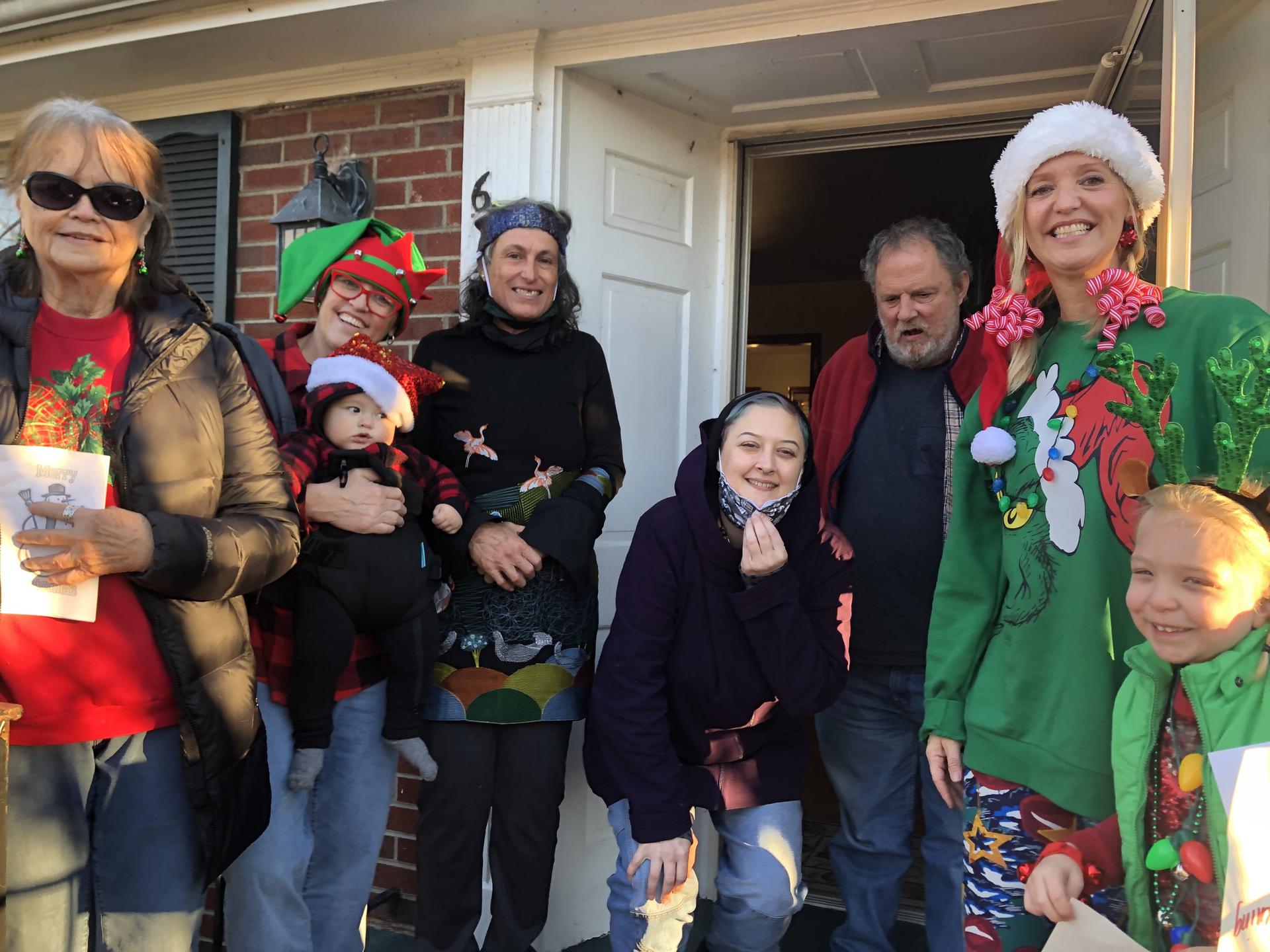
And this Christmas, he would greet carolers at his door and share table and season’s blessings with those who have loved him.
Jeremiah will have been home for twelve full months in just a few more weeks.
In a year that has struck us so profoundly with the deaths of 31 current and formerly homeless neighbors, victories like Jeremiah’s remind us that God’s work is less about the keys we distribute, the services we provide and the people we “fix.” It is more about how we join the holy spirit within the liminal space, the wilderness, in which our neighbors find themselves.
Author and Franciscan priest Richard Rohr explains liminal space as the time between stages of life. It is a place of transition, waiting and not knowing.
“It is where we are betwixt and between the familiar and completely unknown,” he says. “This is the sacred space where the old world is able to fall apart, and a bigger world is revealed. If we don’t encounter liminal space in our lives, we start idealizing normalcy.”
While the space between is brief for some, and a lifetime for others, our wildernesses always make it difficult to see God most clearly.
Between is a frightening place to be.
Knowing that God chose to take on human form and dwell among us, however, frees us from our restlessness and invites us to a place of comfort in the unknown and excitement of what is to come.
The message version of John 1: 1-18 says, “The word became flesh and blood and moved into the neighborhood…. No one has ever seen God, not so much as a glimpse. This one of a kind God expression..has made him plain as day.”
As lovers of God and lovers of neighbor, this passage calls us to be more than a tourist in the lives of people who are different from us. As God through the human form of Christ “pitched a tent” alongside us, learned our language, and came to be fully part of the world in which we live, might we embrace that example as we seek to love our neighbor more in 2022.
Happy New Year!
“The word became flesh and blood and moved into the neighborhood….
No one has ever seen God, not so much as a glimpse. This one of a kind God expression..has made him plain as day.”
John 1: 1-18
Join our Team
Looking for an opportunity to literally end homelessness for neighbors moving off the street or our of shelters and into housing? Our community needs someone with tenant agent skills to build relationships with landlords, find units and help move people into safe and stable homes. APPLY NOW to be our community’s housing locator.

-
Street Church: Lessons From A Young Church
“What does it mean to be the Church?” I asked our small group of dedicated leaders. We decided to hold our “community forum” the last Sunday of the month after church to discuss the business of the church and the places we want to grow in and glean from as a new faith community. Together, about 15 folks from our worshipping community gathered after our Street Church worship service one breezy September afternoon to ask, “what does it mean to us, to be the Church?”
As we gathered together, I gave each member of our community a post-it to put on a board and asked them, “Write down on your post-it: What has the Street Church Community meant to you?”
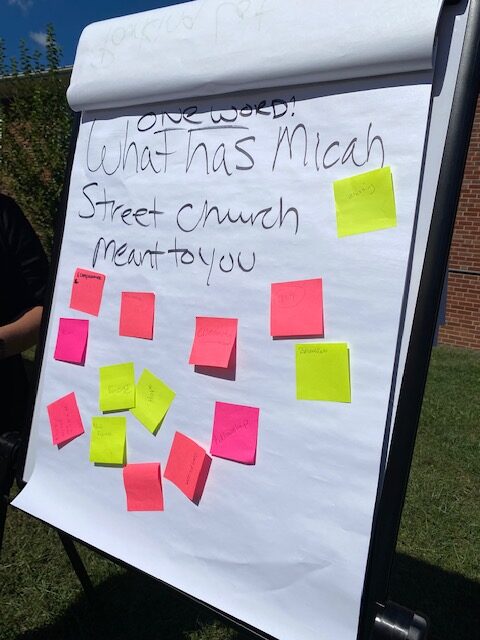
I hear a collective chatter amongst them, as they share their reflections and then, one by one responses, came forward. Words like, “relief,” “help,” “respite,” “sanctuary,” “foundation,” “safety,” and “[a place for] unity” filled the page.
Honestly, I was touched by their responses. As their Pastor, I want to make sure that they feel welcomed in the house (or in our case, yard) of God. My goal from day one has been to make them feel like they are coming, “home” to God’s house; if we can do that, then we know the Spirit is here. Seeing their responses reminded me that this special place, our little rag-tag church, had not only found a place to worship, but they found a sanctuary where they could feel safe and lay a firm foundation in Christ…right in the backyard of Fredericksburg.

When we were started to dream about what it meant to be “Street Church,” we had spent a lot of time in the parable of the sower (Matthew 13:1-9). I remember making the connection that it was God who sows the seed, but we have to be tillers of the spiritual soil to make sure that the seeds God would lay in our path could grow. Suddenly, the words “Gather, Sow, Grow” came to me from a still place in my own spirit. I knew it was God touching my heart and giving me a visual cue of what this community could root itself in. Since then, it has been the tag-line of our community, and it helps me be intentional in the various branches of our ministry.
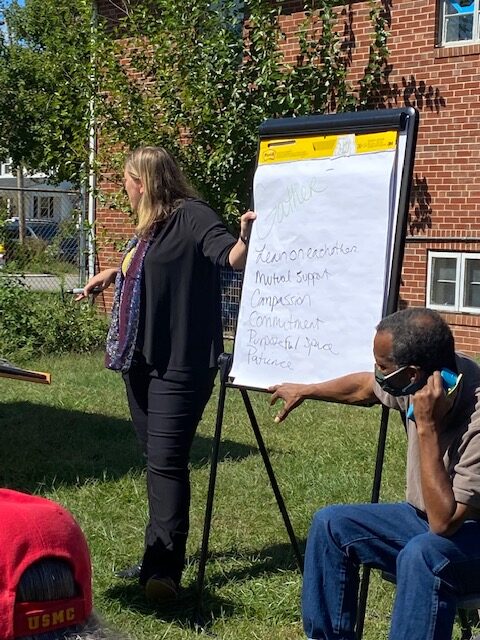
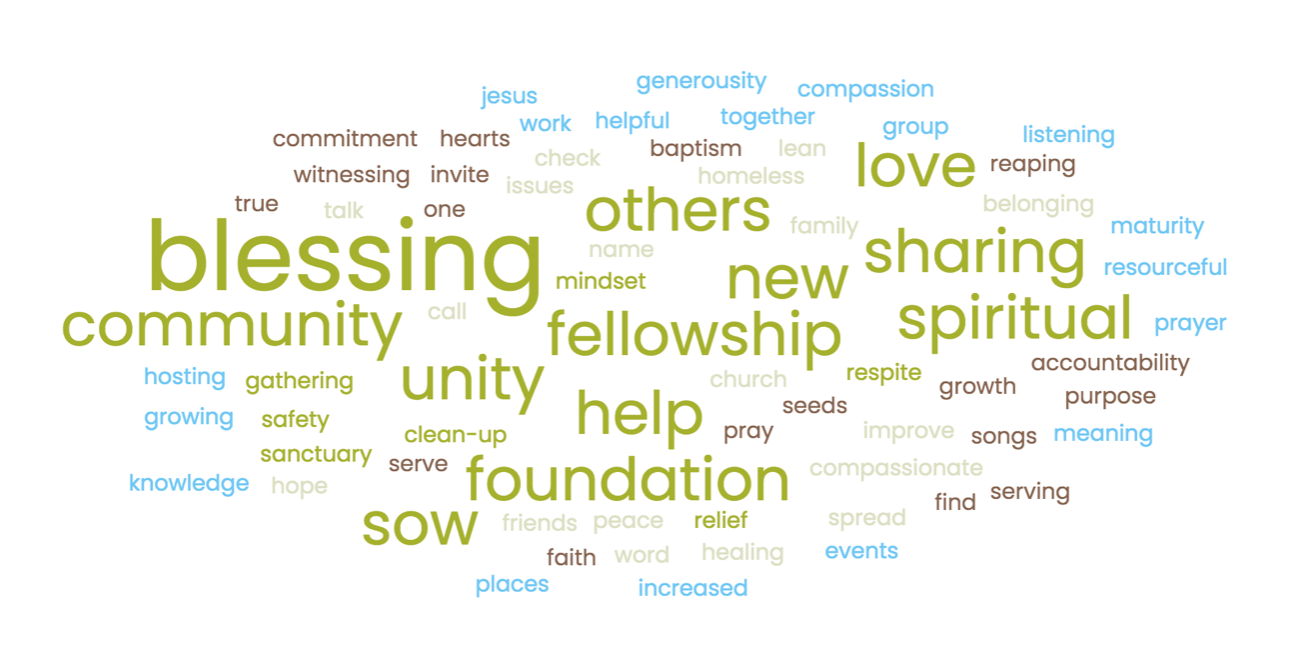
One-by-one, I asked them, “What does it mean to you to ‘gather,’ to ‘sow’ and to ‘grow’ as a community?" They filled out their post-its and we discussed what it means to be a church who gathers, who sows seeds of discipleship, and who grows in Christian maturity together. Below is a word cloud of all of their responses. As you can see, the complete themes started to bubble up in font size, depending on how many times the word showed up. The word “blessing” stands out to me as the main focus of this community, a “blessing” to others and a blessing to this community.
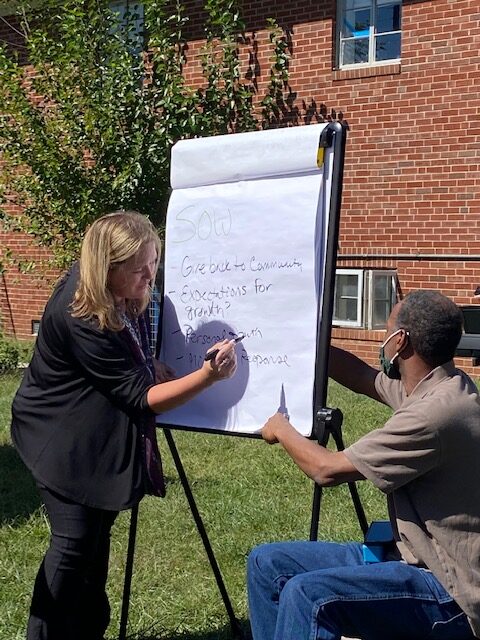
As we were discussing what it meant to be a community, one member raised his hand. “Pastor Chelsea, I’m concerned that we have some folks in our community that don’t understand the expectations of what it means to be at church and to behave accordingly.”
This was a member of our community who had experienced homelessness, himself. I was surprised by his critical reflection of the community. I wondered if he was alone in his thinking. Suddenly, others spoke up and shared that they too struggled with those who spoke out of turn or were not respectful during the service. In my world, not experiencing homelessness, I didn’t have high expectations for what they would expect from church or each other. Yet, here was our church, who had higher expectations of their community and certain ideals about what it meant to be in “God’s house” despite my constant invitation to “come as you are.”
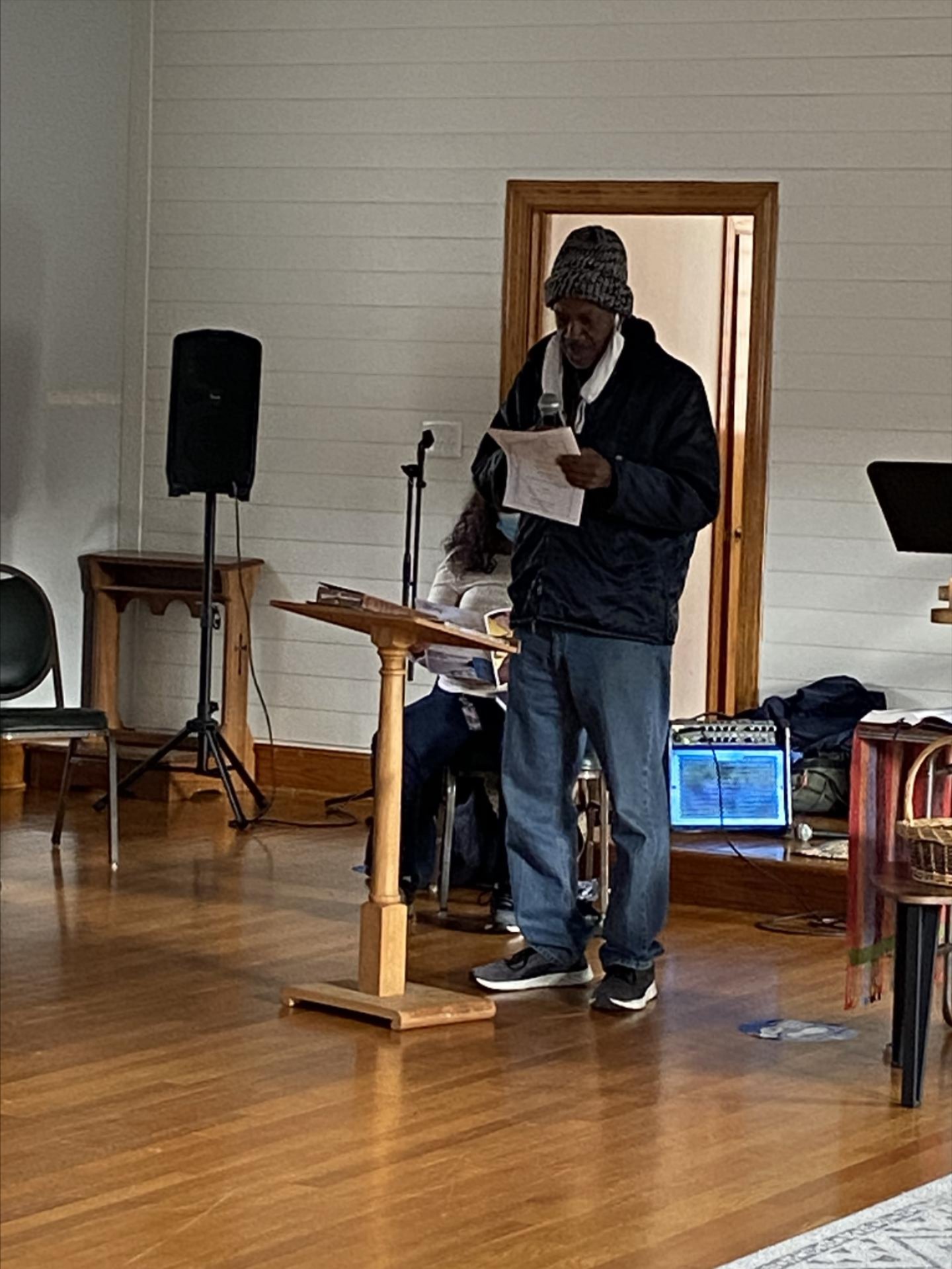
I realized that this commentary was not new for the Church. Since the early apostolic movement, Jesus followers have been trying to figure out what it means to be a living body of Christ. Paul spent many of his letters explaining to early church congregations what it meant to live out the gospel. Ironically, roughly 2000 years later, we are still struggling with the same thing.
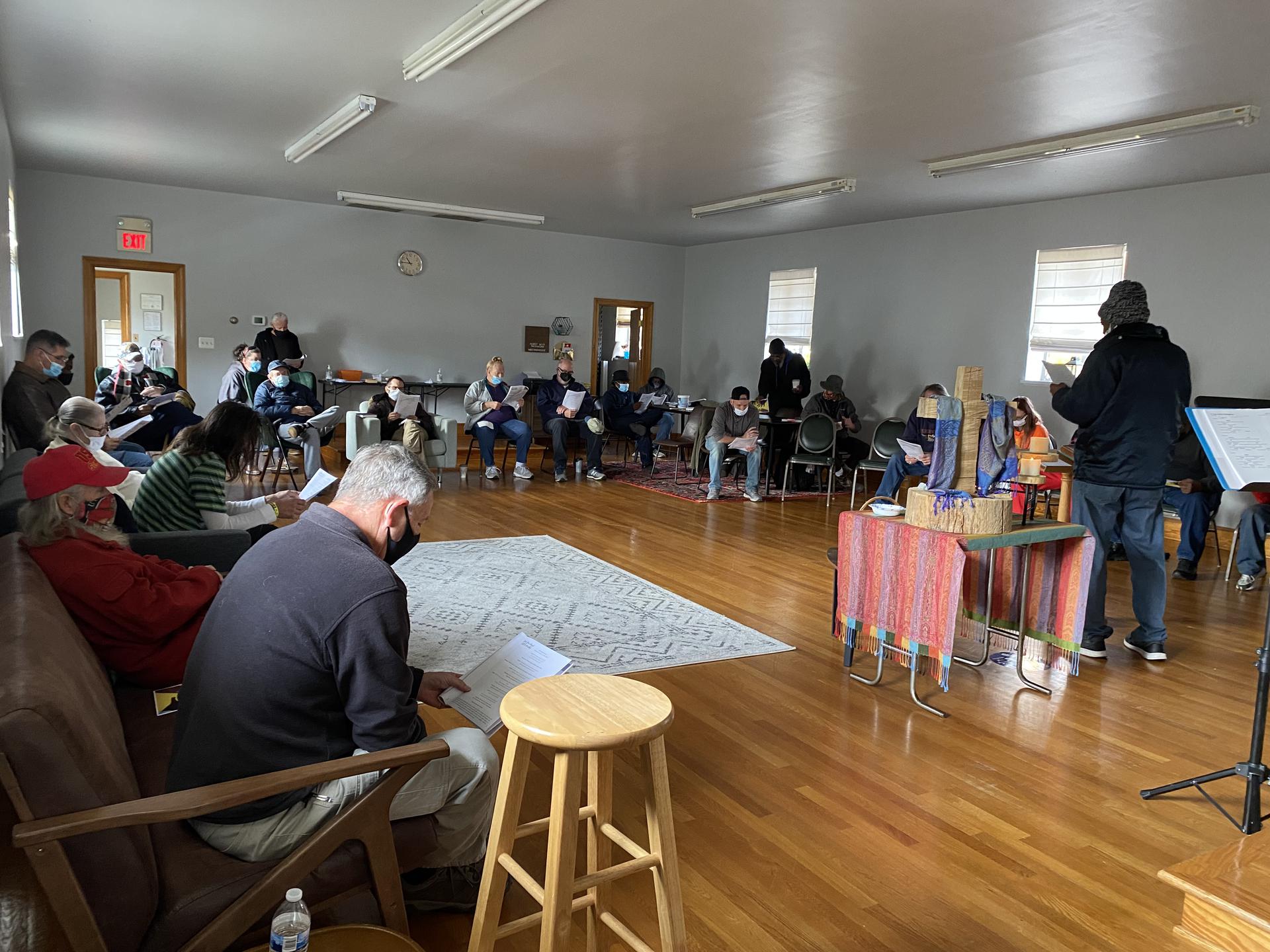
Together, our Street Church community committed to a season of reflecting on what it means to come together as one body and lean into the principles of Gather-Sow-Grow. The first week, we talked about what it means to enter into the “House of the Lord” with expectation and anticipation of what is to come. We focused on the fact that we must put ourselves aside in order to encounter the living Christ in our midst. We come with intention and center our hearts on what God has for us in that space, as a people intended for community with one another.
Last week, we had the opportunity to focus on what it means to “Gather” as a community. We rooted ourselves in the book of Hebrews lectionary text for last week (Hebrews 10:11-25). Together we emphasized the reasons why we gather. We gather to Repent, Remember, Rejoice and Proclaim the good news. As a community, we recognize that we are all fragments, broken pieces put back together with the help of God’s grace active in our lives. We gather to remember and remind one another that we are all in need of God’s grace and God keeps the promises set for us. Finally, we gather to rejoice in this good news and to proclaim it to others in the form of love and good deeds for our neighbors.
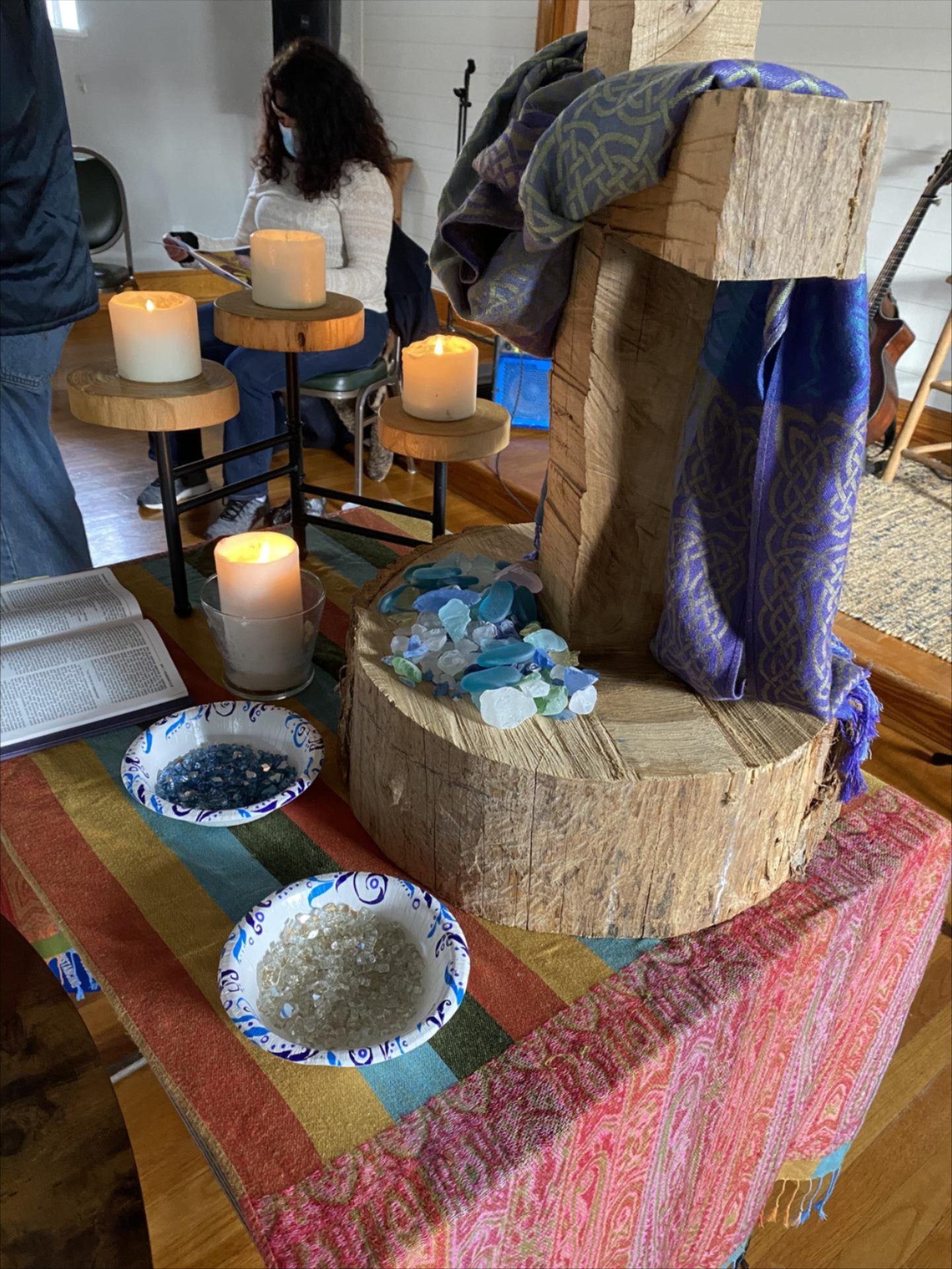
As an activity, each member of our community took a piece of broken sea glass. One of our members, ‘Dre, drafted, designed, and molded a cross out of clay during worship time. After the sermon, we put each of our broken pieces into the mold of our cross, which represented the love and Grace of Jesus, which holds all of our broken pieces together. Now, this collective piece of art will be a part of our altar at worship time.
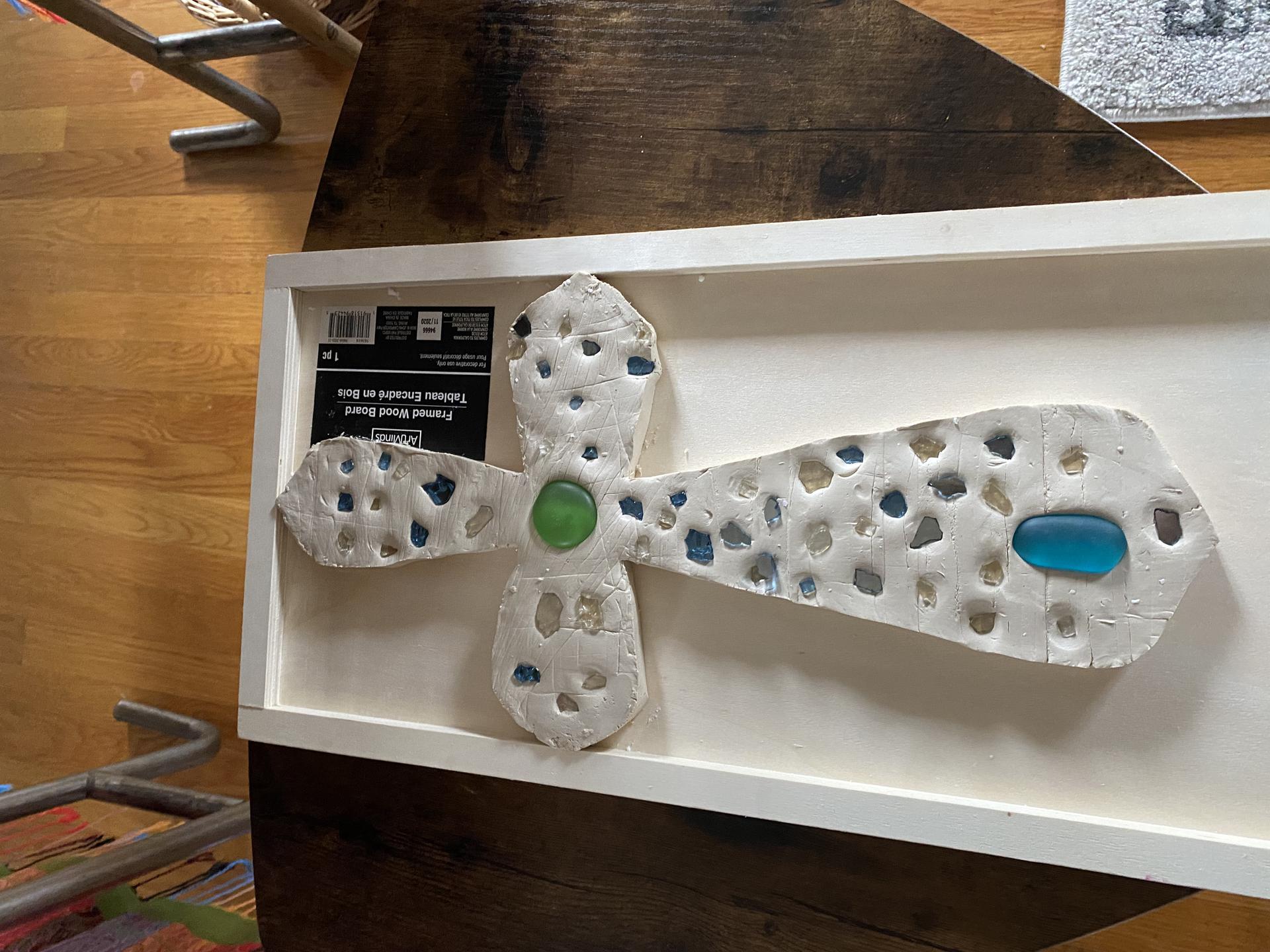
In this season of “gratitude” I am immensely grateful that we have a community who shows up for one another. A community who asks the hard questions of what it means to be the “Church” for a community who has often been left out of the question. They have often been ‘served’ rather than asked how they want to serve those in their community (something, I have found, they have already been doing long before Street Church was ever in the picture). As the larger Church, we have the opportunity to gather-sow-grow alongside our neighbors and to come and see what they have to teach us about what it means to be the unified Body of Christ.
I can’t wait to see where we grow next…
Thanks be to God.
Grace and Peace,
Pastor Chelsea
Chaplain | Micah Street Church
Micah Ecumenical Ministries
-
Remembering the Saints
While away on a Thanksgiving trip to visit my in-laws one year, the last person I expected to get a call from was a detective tasked with investigating me.
Before leaving town, I had gone to check on one of our neighbors named Cathy McCullough. She had been battling cancer and I wanted to make sure she had what she needed while I was gone for a few days.
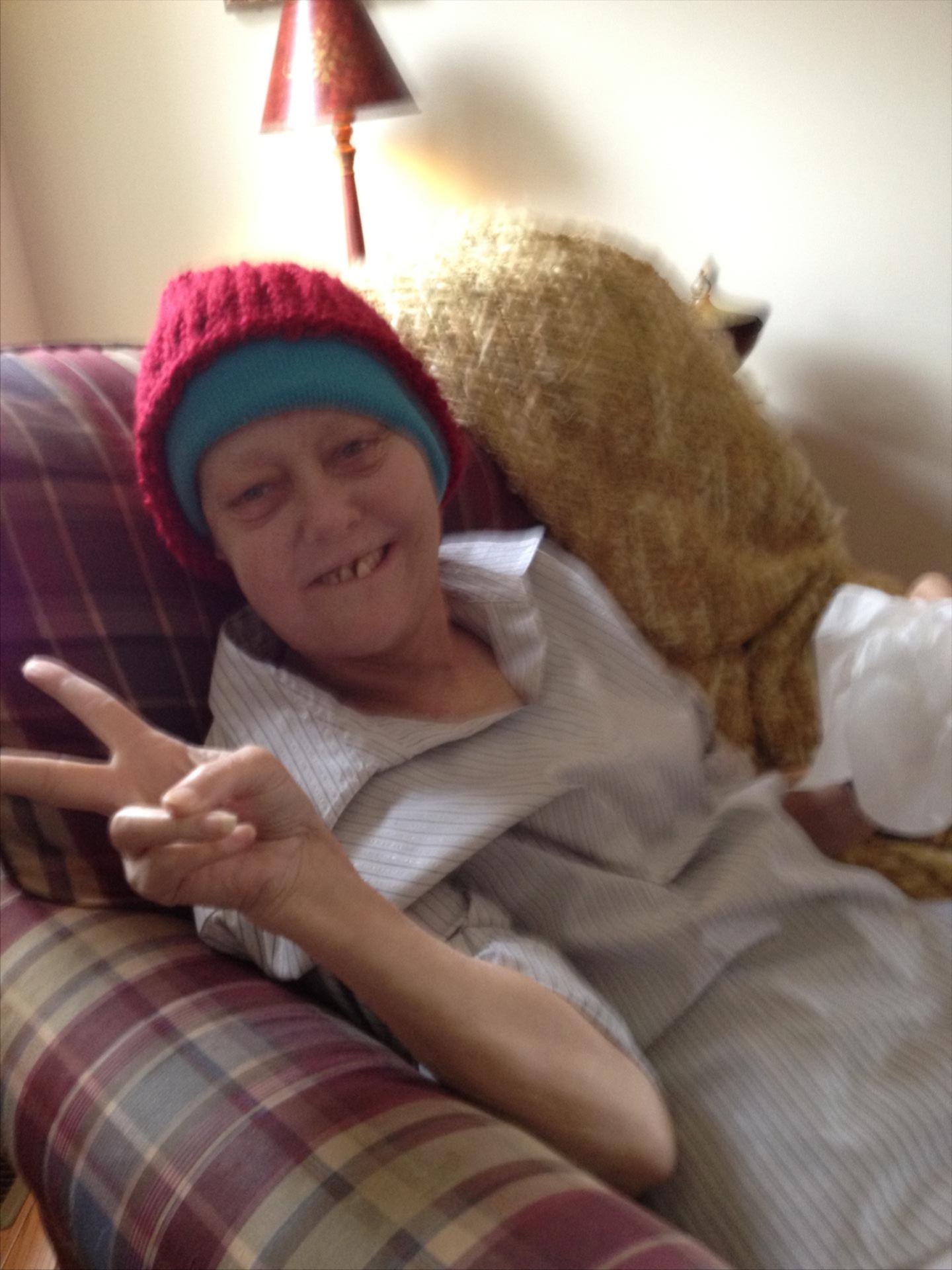
After a good 20 minutes of knocking on her door, I got concerned and jimmied the lock with my credit card. Cathy was perfectly fine, but she was quite angry that I had both invaded her space and awoken her from a nap. There wasn’t much talking to her at that point, so I left my number, reminded her I was leaving town and told her to call if she needed anything.
She called, alright. She called the police to report me for breaking and entering!
The good news is that the police were content with my samaritan efforts, and they let me go without much fuss.
Cathy’s struggle with what would become terminal esophageal cancer, however, was only just beginning. Some months later, she would become so ill she had to transition to Micah’s respite house where she could be cared for around the clock by members of the downtown churches and staff.
Her suffering was great. The cancer kept her in constant pain, prevented her from eating on most days and eventually attacked her spinal cord, such that she could no longer hold her head up straight. Yet, Cathy maintained this relentless peace about her, embracing whatever life she had left and finding ways to persevere despite her suffering.
Many of us remember fondly her insistence that she have the opportunity to ride a motorcycle before she died. There was no use trying to convince her that it wasn’t safe or she wasn’t well enough. She needed it to happen. Luckily, one of our long-time volunteers and motorcycle extraordinaire had just the connection–a friend with a bike and a side car who was happy to take her for a ride.
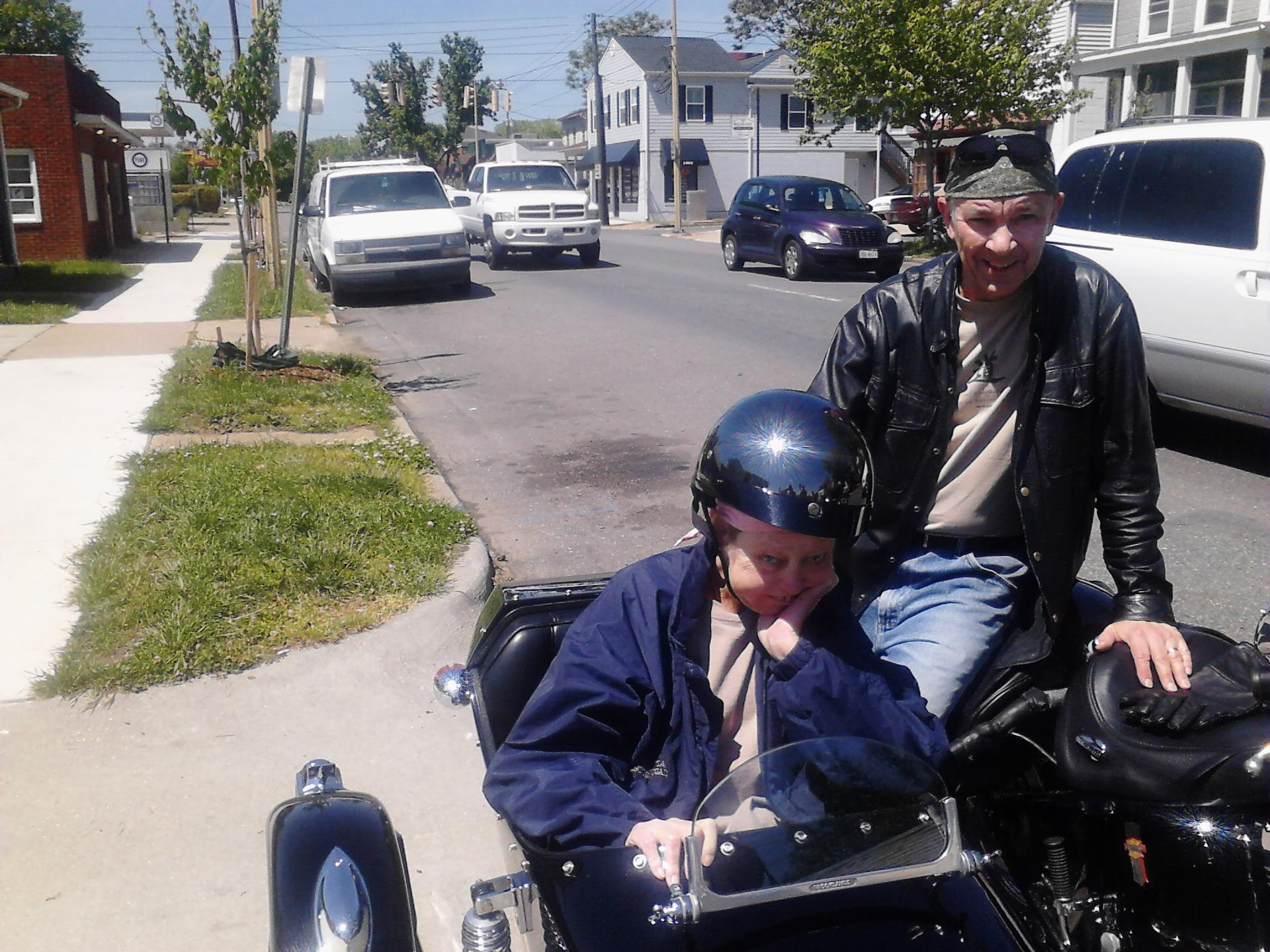
Another thing that Cathy felt strongly about was that we help track down her family. She was one of four siblings, but they lived in different parts of the country and had all lost touch with one another over the last 25 years.
Many in the Micah community are often so estranged from family that they don’t have or think it important to list an emergency contact. When they die, that often means there is no one who can legally claim their body, write an obituary, hold a funeral or bury them. Micah is often the recipient of our neighbors ashes many months later when their cremains have been turned over to the local police department as unclaimed property.
In recent years, we have worked to rectify that pattern with community notice of our neighbors’ passing, funerals and burials in various church cemeteries. That was not always the case in Cathy’s day, and she saw to it to teach us how we could walk them to the grave and go on to remember them quite differently.
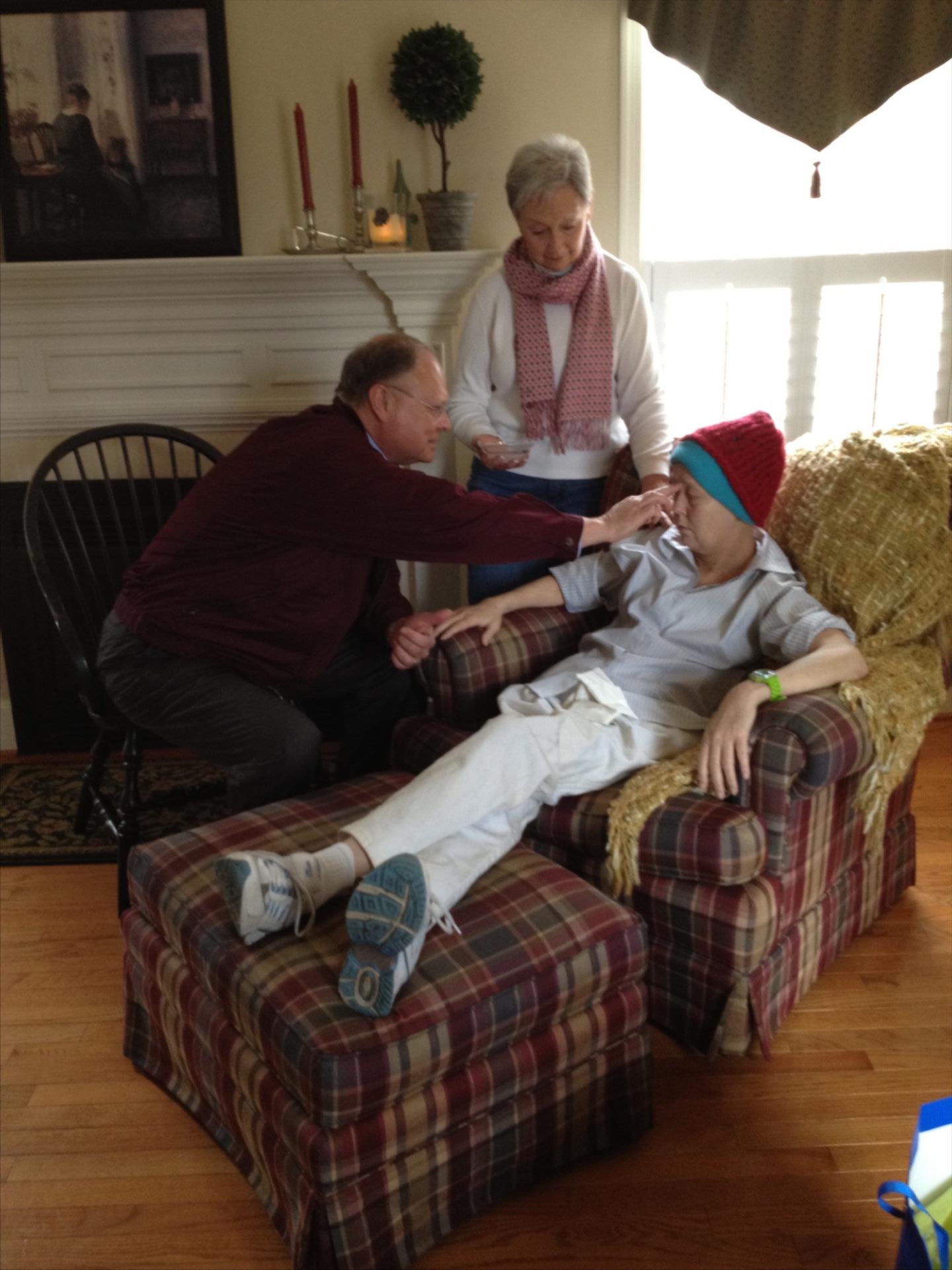
After learning that her time was coming to an end, Cathy asked that she be Baptized. The pastors of the downtown churches have often assisted with sacramental blessings for our community.
With Cathy’s help, I put my old reporter skills to work and tracked down both her sister in Minnesota and brother in California. Sister Susie traveled to Virginia and spent time with Cathy in her final days. Howard, the brother, couldn’t come at the time. But they talked regularly on the phone and worked together to find their other brother, Michael, who also happened to be in California not far from where Howard lived.
When Cathy died, we held a memorial for her at the city dock and scattered some of her ashes in a place that was important to her street family, which she affectionately called the "river rats." Cathy spent many years living in the woods near the Rappahannock with this legendary group of unhoused neighbors. They had been a nucleus for others who found themselves on the street, teaching people to survive and caring about them as family. Before there was a collaboration of churches, before there was a Micah, our neighbors were a community to each other. Much of what we now know about loving and coming alongside them, we learned from how that group of "river rats" cared for one another and invited us to be a part of it.
While many in the wider community may have never known Cathy and others who have passed on before and after her, their stories still hold power in the lives of our neighbors. They are the saints, whose time in the darkest corners of our community have informed who the church of Fredericksburg has learned it needed to be.
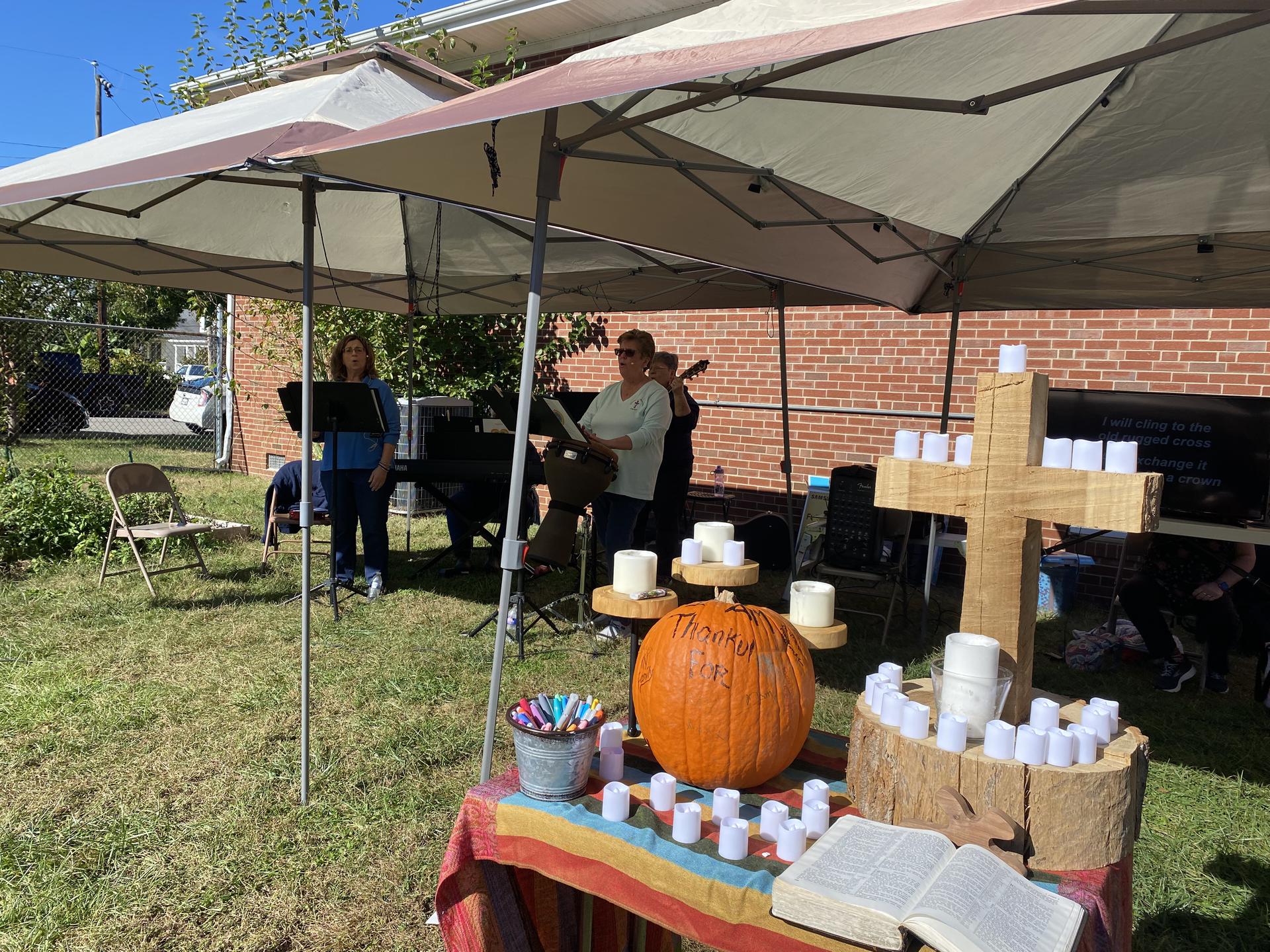
Cathy and so many others were on my mind this past Sunday as our Street Church community lit 26 candles in honor of the current and formerly homeless who have passed on from this world in the last year. In many a congregation, on All Saints Day, we remember the church mothers and fathers, the saints, who have gone before us. We do so to acknowledge that we stand on the shoulders of those who lived and died, yet contributed to our own greater and evolving place of existence.
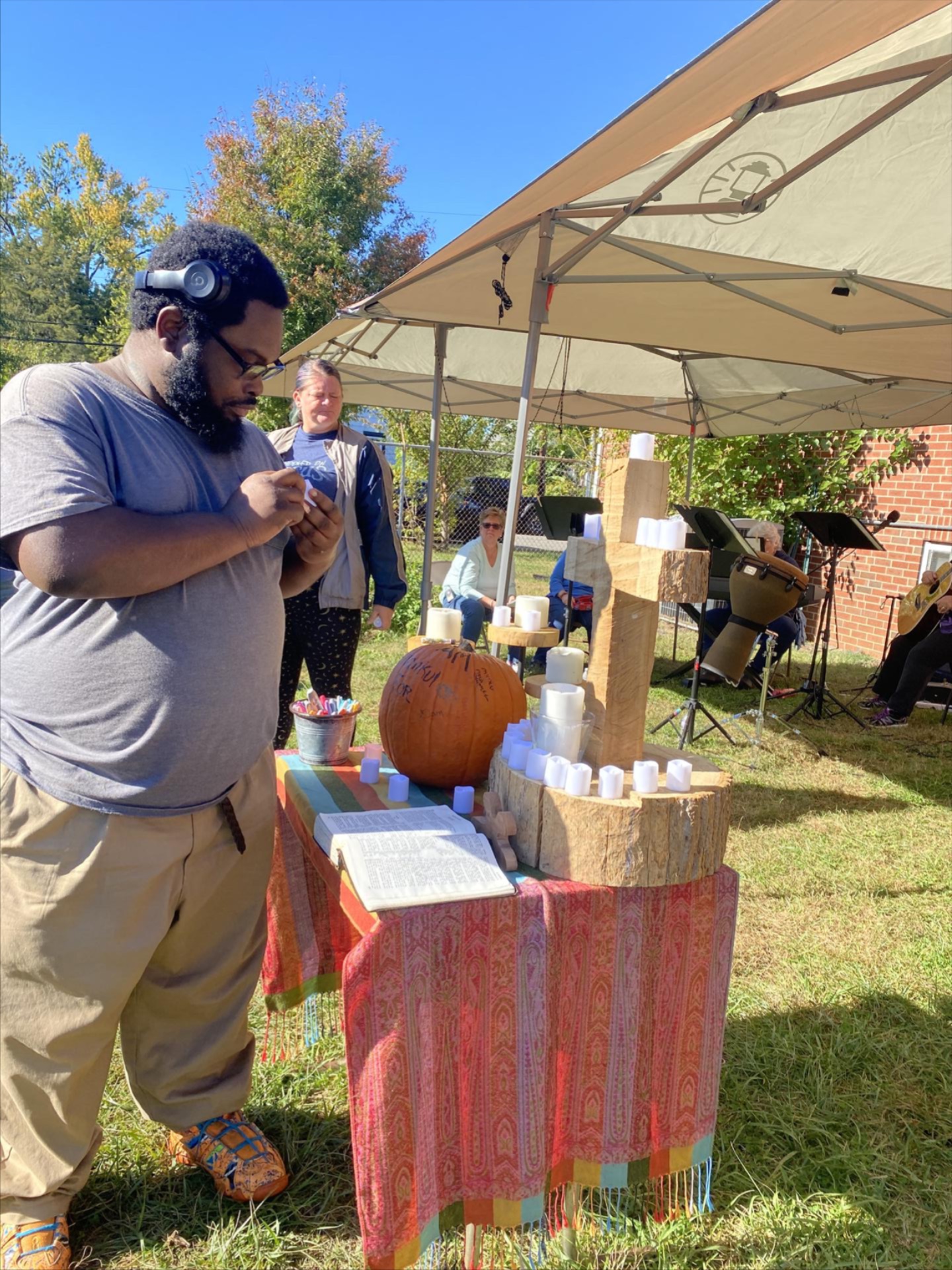
Our neighbors have and continue to make those contributions in lives of each other. And their experiences inspire us to imagine and pursue a world that looks a lot more like God’s kingdom.
It was Cathy’s group of "river rats" that often found their way to the Micah churches when no other programs were available to them. They befriended church secretaries and pastors downtown. Learning about their struggles led the churches to feeding ministries, clothing closets and eventually a one-stop hospitality center where more members of the congregation could learn these neighbors names, hear their stories and journey with them as they worked their way to the fullness God imagined for them.
It was the terminal health of a man named Mike Cooper, Cathy’s significant other, that inspired Micah churches to have a respite house. When he was dying, the hospital sought the help of the churches to give him a place to stay. He had no insurance and his own family was homeless, as well. The churches rented an apartment and Cathy stayed with him to care for him until he passed. Some years later, the imprint of that experience piggybacked on many more that would come after. It led to a lasting partnership between the hospital and the Micah churches, now an eight-bed group home for homeless leaving the hospital in need of a place to stay or die with dignity.
The lonely deaths of Tammy Speck and Bond Thompson and David Mould and so many other cornerstones in the Micah community led us to understand how much relationships needed to follow our neighbors into housing and be reimagined beyond surviving together. Where tangible supports like housing, income, health care fell short, Street Church was given life.
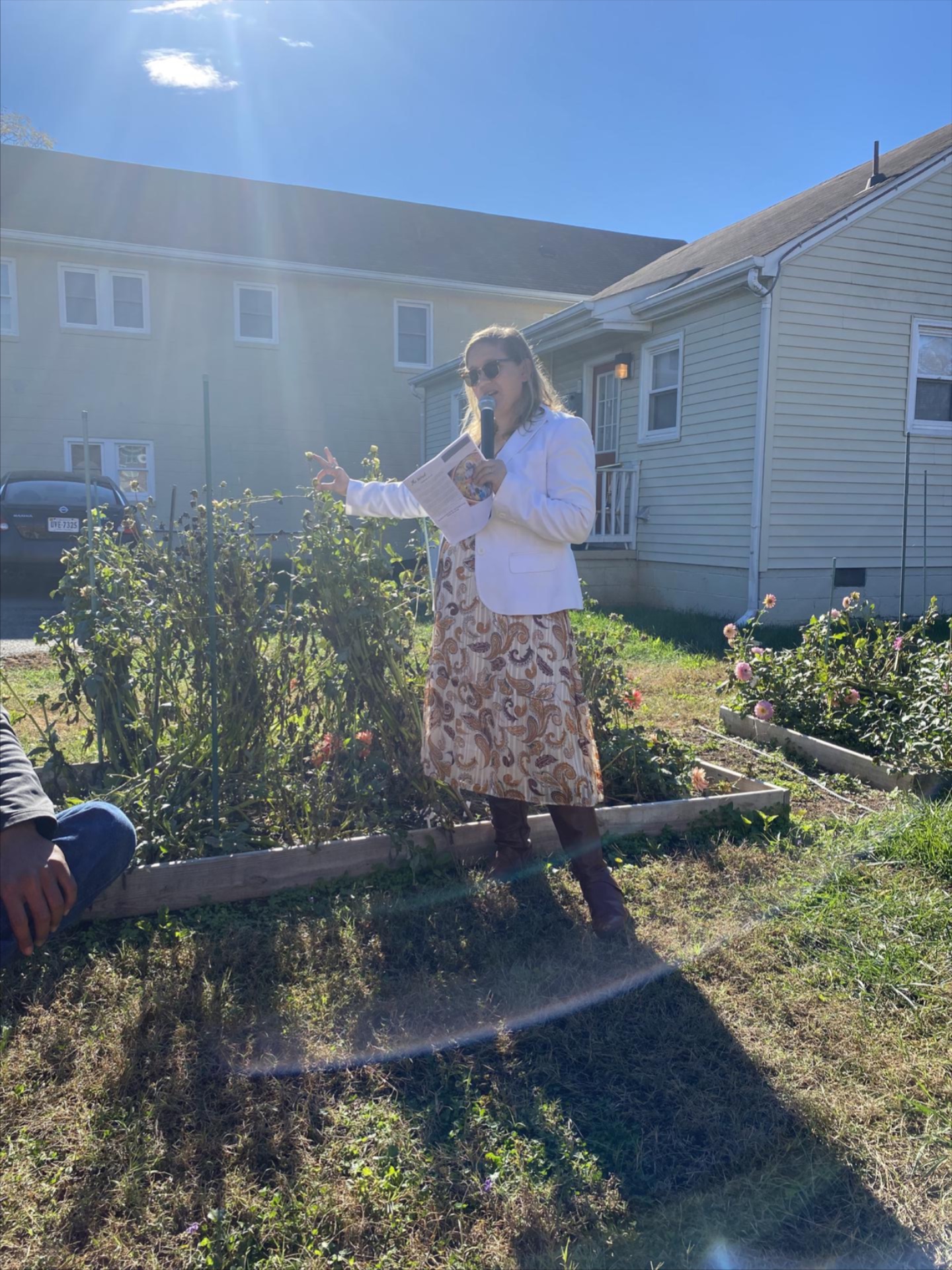
Revelation 21:1-6 promises a new heaven and a new earth as the ultimate completion of the creation story. Yet, the end always takes us back to the beginning. Old things pass away, God makes a home among us and creation begins again and again and again. God is both the Alpha and the Omega. God shapes and reshapes all things, giving new life and breath to the spaces in which all hope seems lost.
It is the stories of so many saints in our Micah community that have informed who we have learned God needs us to be. The end of their stories is always just the beginning of a new legend on which the people transformed by relationships with them can build a new future.
After scattering some of her ashes, Cathy had asked that a member of our Micah churches, to whom she was particularly close, hang onto what was left. "You’ll know what to do with them someday," she had said. That was at least nine years ago.
A few weeks ago, Cathy’s brother Howard who lives in California called to say he would be coming through town. He wondered if we still had her ashes, as he wished to pick them up and arrange to bury them on a family plot in New Jersey. Their brother Michael had since died and the whole family would be gathering to scatter his ashes, as well.
Howard, his wife, Cathy’s friend and I sat at the big table in our conference room to pass off the ashes. "You know, she practically raised me," Howard said. "I was the baby and as soon as I could leave home I did. I lived with her for a while, but when I left there I lost track of what happened to her."
We laughed together about Cathy’s love of boiled peanuts and peach tea. We marveled at her street smarts, the things she did for survival and the nerve she had to try and get me arrested!
Then Howard said, "For all her ups and downs, Cathy brought the family back together. None of us would have found each other had it not been for Cathy."
As Howard, a spitting image of Cathy, got up to leave, I walked him to the door. If I didn’t know better, I could almost see the spirit of Cathy quietly looking back at me, pausing as she rounded the corner with glint in her eye and a final peace sign.
The Alpha and the Omega, indeed. The works of God being made complete and new, again and again and again.
With Justice, Kindness and Humility,
Meghann Cotter
Executive Servant-Leader
Micah Ecumenical MinistriesRemembering the Saints of 2021
Join the Micah community in lifting up and praying for the saints passed on in 2021.
Christian Maddy, 0
John Fulcher, 38
Muriel Pogue, 47
Stephen Hilleary, 41
Ross MacKenzie, 68
Matthew Allen, 42
David Shupp, 49
Shiferaw Tessima, 57
Wanda Lawson, 61
Wilburn “Wade” Wilkins, 50
Mark Johnson, 58
Tony Melo, 57
Mark Bunting, 40
Gena Wood
Nate Ratliff, 46
Brenda Hinz, 60
Albert Nave,
Kenneth Campbell, 60
Frank Dungan, 40
Dustin Hayes, 32
Antonio "Tony" Hall, 59
David Mould, 63
Mike Defrietas, 59
Ronald Buddington, 58
Shaun Foshee
Frank Smith, 65

-
Street Church: You Had to be There
It was 10:05 am and our congregation was still trickling in for worship.We’ve been talking for a few weeks about whether it would be better to start the service at 10:30am, but on Micah time that probably means people wouldn’t arrive until 11am.
Just then, Wendy’s name popped up on my caller ID. I answered.
"So, the bus came and I said to give me two minutes, but I took three," she said. "Is there a way I can get to Street Church?"
"I’ll come get you," I said.
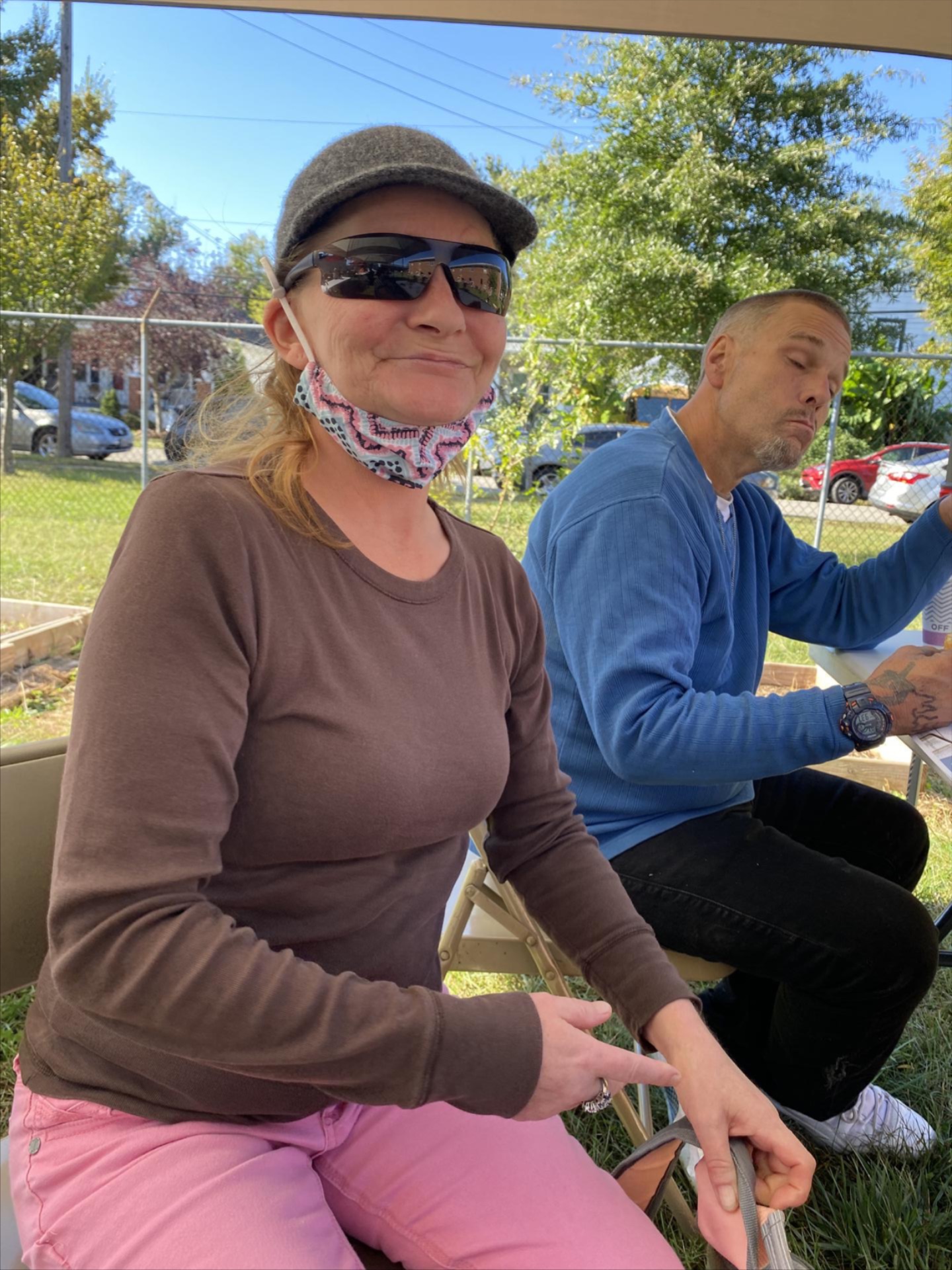
Wendy and I arrived back at Street Church just in time to hear the crux of the sermon–neither Job nor his friends knew enough about creation to determine whether the suffering he experienced has anything to do with judgement. In Job 38:1-7, God pretty much says "you had to be there," when the world was created to understand just how non-mechanical the universe actually works.As I sat down at my seat, Bobby hollered my way. "Meghann, I need to talk to you." Trying not to be disruptive, I waited a few moments then made my way to where he was sitting.
"Did they tell you I got cancer," he said. "Gonna have to do treatments, but the doctor said I could be alright."
I did know, and he has a long road ahead.
"Would you tell everyone to pray for me," he said. I nodded.
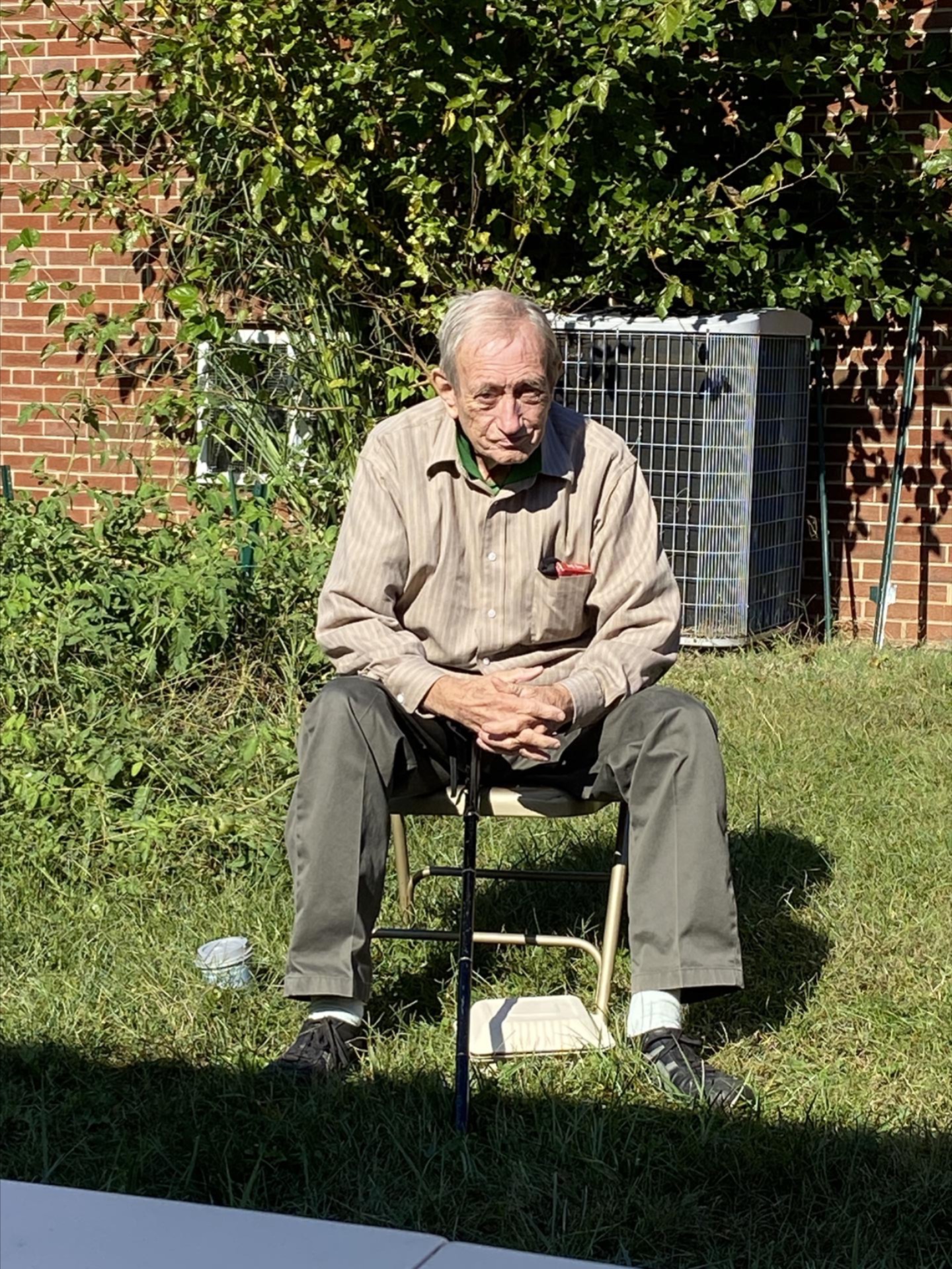
I was about to sit back down, but Buddy walked in. Recently, Buddy had gotten himself in a bit of trouble and needed some help getting a place to stay for a few days. I had arranged to meet up with him on Saturday, but couldn’t find him at the place and time we had arranged.While I coordinated a hotel room over text, we had a good chat about what got him in trouble and how we could work together and do better this time.
"I’m not going to mess it up this time," he said. "I’m gonna die out here if I do. I am not gonna mess it up. I can’t."
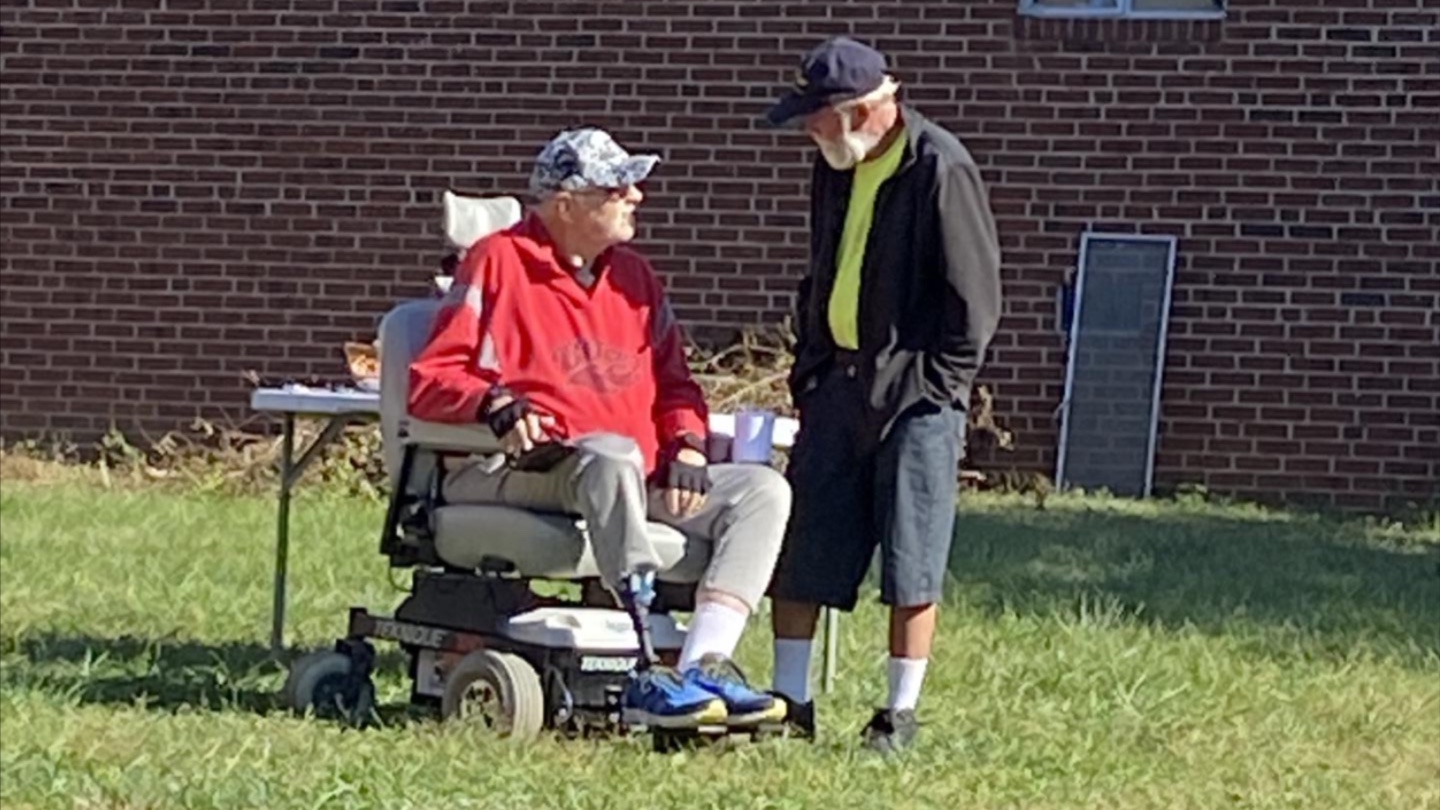
As the service was wrapping up, I continued a text conversation with a young man who had a kidney transplant a few years ago. While the kidney has given him a second chance at life, he has struggled tremendously with depression. I had finally convinced him to let me take him to do his laundry Sunday afternoon, and he was trying to cancel."I’m not feeling well, today. Can we do this another day?" he had started at 6:30 that morning.
"You probably aren’t feeling well because you’ve been stuck in bed for days," I advised. Why don’t you take a shower and see how you feel?"
"Be right back," he said.
After a few minutes, another message came through, "Alright, when are you going to be here."
"20 minutes" I said.
In the meantime, I took a call from a woman that counts on Micah to manage her money. She had recently been in the hospital for week and lost her phone in the process. Wendy had asked to stop at the store on the way home, so I told her I would pick up another one.
It took a little longer than I planned. While I rushed off to get the phone, Wendy had filled the cart with more sauces and spices than I have in my own cabinet. "Do you need some food to go with your spices?" I asked when I caught back up with her. After some crafty food stamp math we figured out how she could afford a few heat up meals, a pound of shrimp and some hamburger.
By then, my phone was blowing up again.
"Traffic bad?" said our neighbor who was waiting to do his laundry. It had now been 45 minutes. I picked him up on my way to drop Wendy at home, and decided to make the phone drop off on the way back to Micah to tackle the laundry.
"I’ll be in and out in five minutes," I told my laundry-toting friend in the car.
"Timing you," he said.
Of course, the drop off took more than five minutes.
Recently back in stable housing, the woman who needed the phone had taken up a new hobby of crafting from recycled things. She couldn’t wait to show me the little blue truck she had made from scrap wood, broken necklace pieces and scraps of t-shirt.
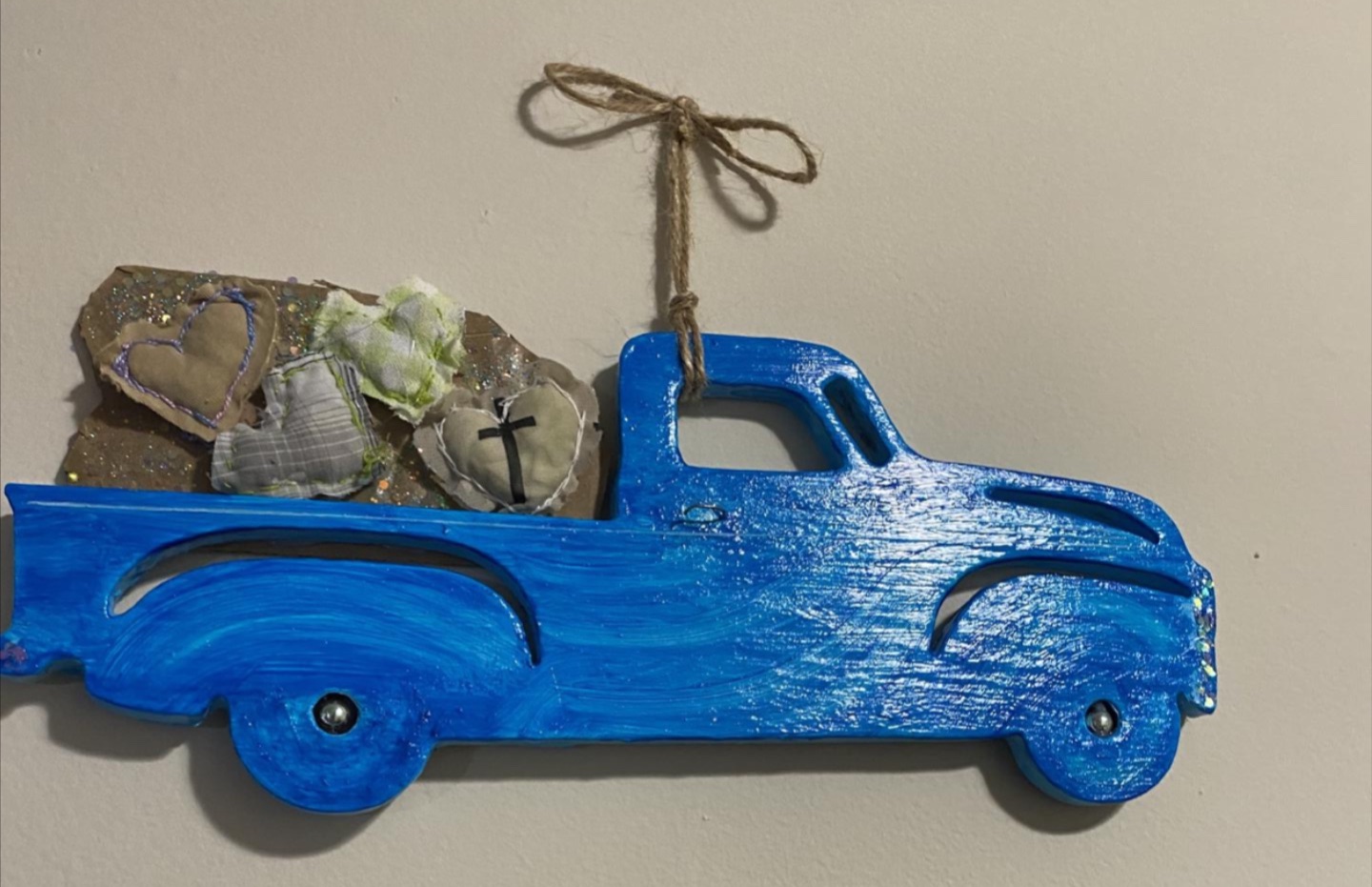
"I’m going to write loads of love on the side," she said, quite proud of her creation."You are pretty good at this," I said. "We need to find some ways to share your creations with others."
"Well," she paused. "I know a lot about making treasures out of discarded things."
Our eyes caught each other, as we both knew what she was saying implied as much about what she was making, as the triumph and tribulation of her own story.
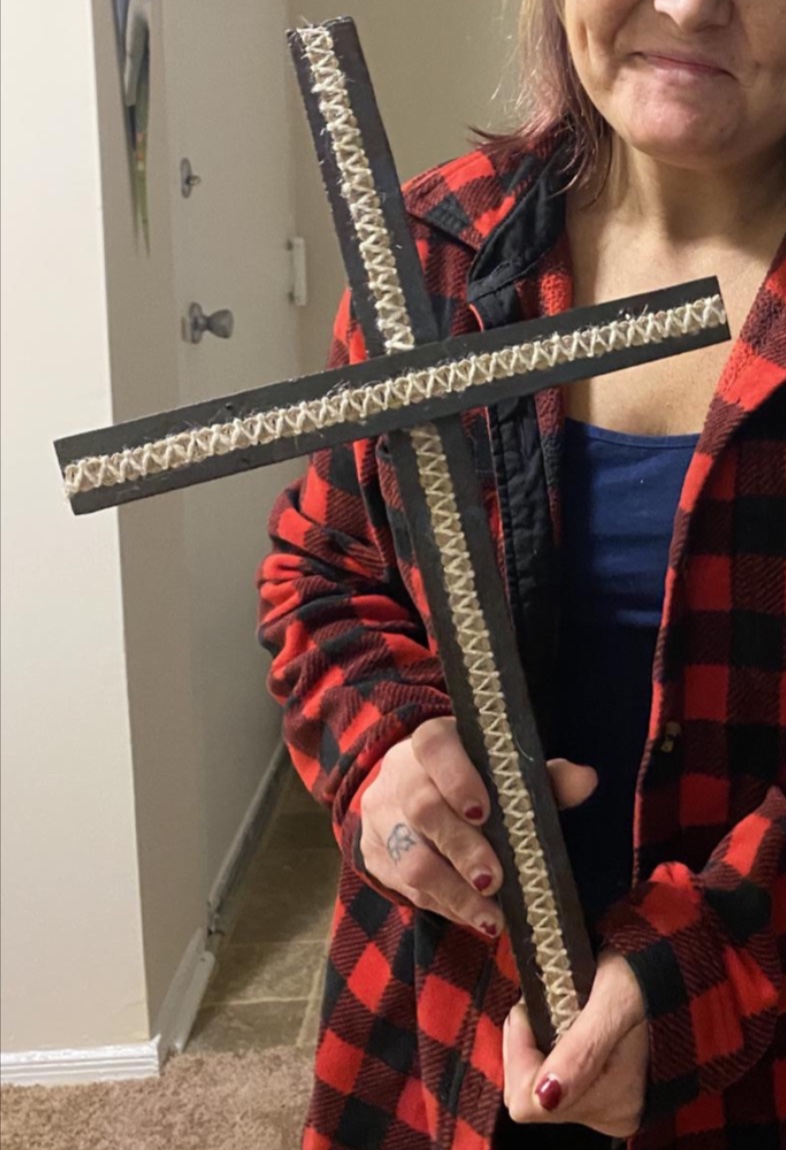
"I made you something," she said, scurrying off into the living room. She came back with a cross constructed out of ribbon and recycled wood.
"I can’t wait to share this at Street Church," I told her.
I know this might be hard to believe, but I did listen to the sermon Sunday. I did sing the songs; and I was fully present at Street Church. What strikes me about the day, however, are the many ways I saw God working on the periphery, using our community of faith to reorder what we think we know about suffering.I could say so many things about the suffering of our neighbors. Their stories are deep and painful, usually involving the catastrophic loss of biological family. They’ve lived outdoors. They’ve been hurt and sometimes hurt others. They’ve given up, at times, and been given up on.
From the outside, they and others who gather with us on Sunday are some of our community’s most renowned lost causes. They outwardly suffer. It shows up in their organizational skills their motivation, their gait and usually the tattoo patchwork across their bodies. Yet, inside this community and relationships with these neighbors, the efforts they go through just to make it through another day are inspiring.
I guess you really have to be there, engaged as meaning parts of their lives, to fully appreciate how much our neighbors want to experience the fullness of their creation. You have to be there to appreciate what it took for Wendy to hustle for a ride to Street Church, for Buddy to come looking for help staying out of trouble, for Bobby to admit he’s scared, for a depressed young man to get out of bed, take a shower AND do his laundry in one day, and a woman who is always in crisis to have made something that could be a blessing to others.
People judge our neighbors for their suffering, each and every day. That judgement debilitates and confines them further. But it is days like this past Sunday that I am reminded of the tenacity they have to overcome that suffering when rooted in a place and with a people to whom they can say they belong.
Thanks be to God,
Meghann
Executive Servant-Leader
Micah Ecumenical Ministries