There are many questions about caring for neighbors that have no easy answers.
“Should I give money to people who stand on roadsides asking for money?”
Say “yes,” and I risk being accused of fueling substance abuse. Say “no,” and I risk appearing compassionless.
“Should we create a place where people can camp?”
Would that offer somewhere safe for people to go—or give us permission to move people out of sight?
“If people cannot follow rules, stay sober, or manage their own care, should we still be concerned with their lack of shelter?”
How do we protect everyone’s safety without abandoning people whose disabilities make those expectations difficult to meet?
Sometimes I wonder if these questions are seeking better ways to help—or coming from a secret hope I will absolve the questioner of the responsibility to care.
I do understand that hope.
There are days I would welcome an answer that lets me stop worrying. Days when I have exhausted what I know to offer, when someone’s choices frighten me, when another phone call brings a need I cannot meet.
But when I give a satisfying answer, I often worry about something else: What happens to our neighbor after we settle the question?
In Matthew 22:15-22, Jesus encounters a question with consequences on either side of the answer.
“Is it lawful to pay taxes to Caesar, or not?”
Where a yes risks alienating people living under Roman occupation, a no risks being accused of rebellion against Rome.
Matthew tells us that the question is a trap. The people asking it want an answer they can use against him.
So, Jesus asks for a coin.
“Whose image is this?” he asks. “And whose inscription?”
It is Caesar, their ruler.
Then give the ruler what belongs to the ruler, he tells them, and give God what belongs to God.
We know where to find the ruler’s image. It is stamped into the metal. But where is it that we find God’s image? Stamped upon you and me, our brothers and sisters, and neighbors—all of them—from the very beginning of creation.
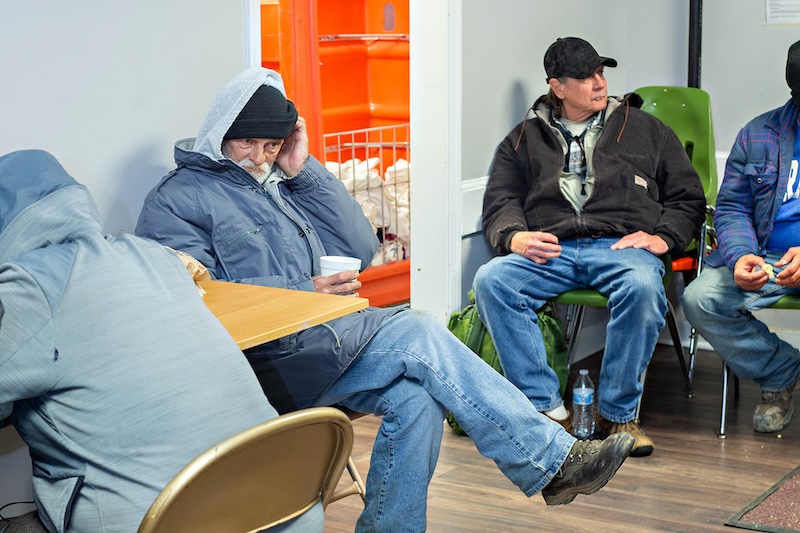
Which means that before we decide what to do about the person on the roadside, outside our building, or struggling to stay in a shelter, we have something to recognize.
Here is someone who bears the image of God.
And whatever answer we give must reckon with that.
Recognizing God’s image will not tell us exactly what to do every time someone asks for money. It will not make every shelter safe or every relationship easy. But it gives us a place to begin—and a responsibility we cannot simply hand off.
Our neighbor’s worth begins with God
In Genesis, God gives human beings God’s image before they have accomplished anything. Dignity begins in God’s decision to create them.
And that matters when we encounter someone whose life seems to be coming apart. Addiction can damage a life. Mental illness can make relationships difficult. Trauma can shape behavior in ways we struggle to understand. But none of those things give us the authority to declare that God’s image has disappeared.
We cannot make someone’s worth depend on their ability to get well.
The image of God is a gift we are called to recognize in one another. We do not get to award it—nor can we revoke it.
In Jesus, God binds God’s own life to ours.
In Matthew 25, Jesus identifies himself with people who are hungry, strangers, sick, or imprisoned. Our response to them becomes a response to him.
The person whose presence unsettles us may also become the person through whom Christ calls us. I often arrive prepared to give something or do something, but I discover that I also have something to receive: a truth avoided, a gift overlooked, a relationship through which God changes me.
Because belonging to God places a claim on us, too.
“Give to God what belongs to God.”
We might begin taking inventory: our offerings, our Sunday mornings, the hours we volunteer. But if we bear God’s image, then our whole lives belong to God—our decisions, relationships, resources, and response when someone’s need interrupts our plans.
We belong to God even when faith becomes inconvenient.
And the church helps us practice that belonging together. We share responsibility, bring different gifts, and make commitments that outlast any one person’s energy.
That is what Micah’s churches are learning through our continuum of compassion: meals, shelter, medical respite, help finding income and housing, and relationships that continue after the keys are handed over.
Because an apartment cannot remove loneliness, drive you to a medical appointment or notice when you stop answering the phone. Those things require people willing to stay beside you.
There is theology in that continuity.
We worship a God whose faithfulness endures through our struggles and whose grace precedes our progress. We answer that grace by learning to remain faithful to one another.
Because our neighbors bear God’s image, they have gifts our community needs.
And because we belong to that same God, their next step matters to us.
So, should you give money to the person on the roadside?
Should we create a place where people can camp?
Should we still be concerned about shelter for someone who cannot manage the rules?
I cannot give you one answer that will settle every situation. But I can tell you something about the person whose life hangs on our response.
They bear the image of God.
The good news is that God has not stopped caring for any of us. God draws near in our confusion, stays faithful through our failures, and gathers us into a community where we can share burdens too heavy to carry alone.
That grace gives us the courage to keep asking what love requires—even when the answer is difficult.
We can decide whether to give money and still care whether someone is hungry. We can address a concern about safety and still care where someone will sleep. We can reach the limits of what we can offer and ask others to help.
Because after we settle the question, our neighbor is still there.
Still bearing God’s image.
Still belonging to God.
And so are we.
“Give to God what belongs to God.”
May we answer with our lives.
Dr. Meghann Cotter
Executive Servant-Leader
Micah Ecumenical Ministries