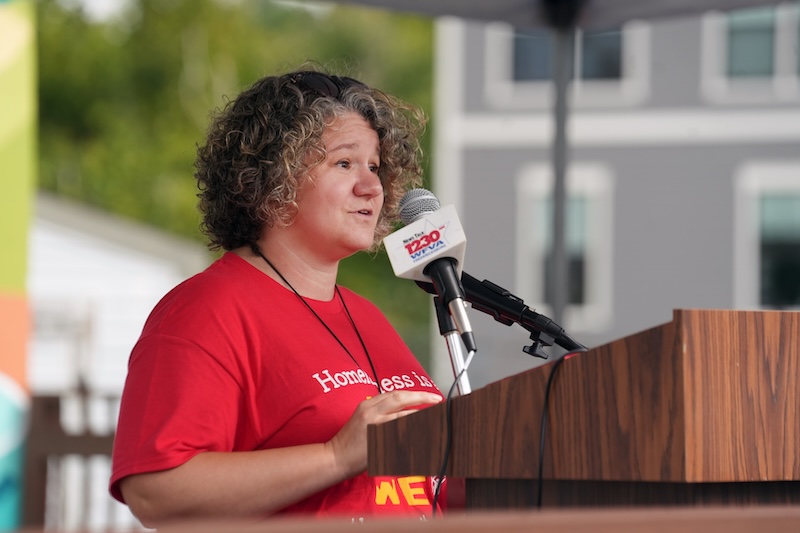
There are a lot of things that can happen in three days.
Apparently, you can build a house.
Although, if we are being honest, this house took us a lifetime to build.
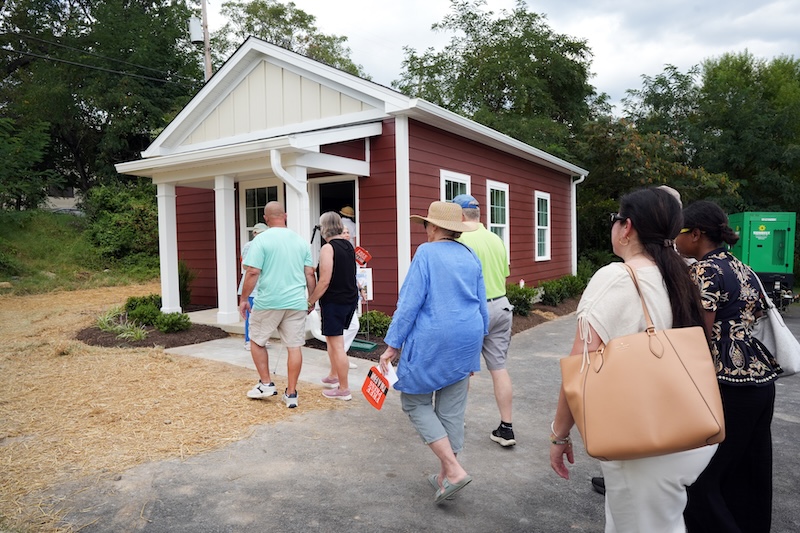
If you’ve visited our Jeremiah Community prototype home on the campus of The Oberle Academy, you’ve seen walls, and roof and floor packaged beautifully, but I want you to see the stories and relationships that built it—and 20 years of lessons from our neighbors about what it means to lose a home and what it actually takes to find one again.
Most of us survive the hardest moments of our lives because someone catches us. Homelessness happens when, one by one, those relationships disappear until eventually there is no one left to catch you.
So I hope you see all the relationships that built this house, because homelessness is a WE problem. And WE, the community, are the solution.
When I look at this house, I see God at work.
I see God calling gifts out of this community and drawing together people who might never otherwise have found themselves in the same place.
There may be no better example than our new relationship with The Oberle Academy, which graciously allowed the prototype to be built on its property. After Micah ceases to use home as an example for Jeremiah Community, the school will use it as a classroom for construction training for its Career and Technical education programming.
Oberle walks alongside young people who haven’t always thrived in a traditional classroom. Micah walks alongside adults who haven’t always thrived in the “traditional world.” Both of our communities know what happens when people are defined by where they struggle instead of recognized for the gifts they carry.
But look what happens when you build around those gifts instead. These students are builders.
And to the trade partners who built alongside them: Thank you for your gifts. What you’ve built is beautiful.
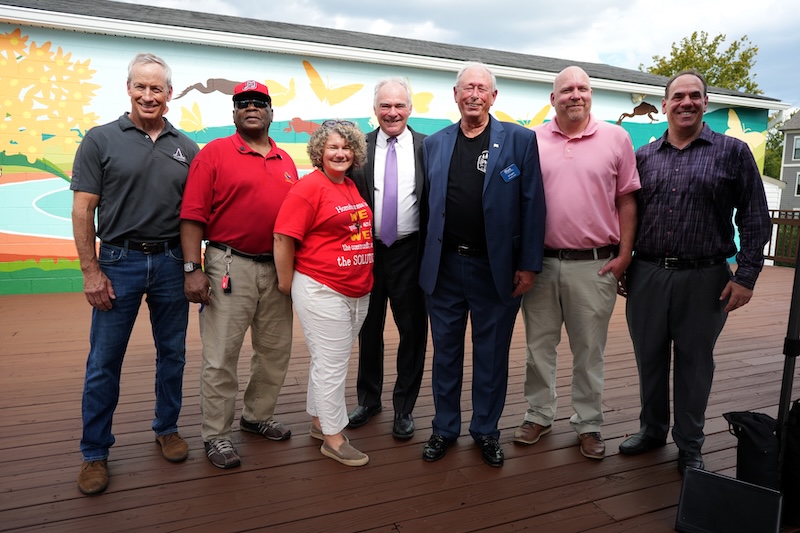
To Sen. Tim Kaine, who came to see the prototype while it was being built, and whose work to secure $2.9 million in federal funding helped keep Jeremiah Community moving forward—thank you for your role in this important work.
And to our Micah staff, who work with great compassion every day to help our neighbors progress in the areas of healthcare, housing, relationships, work, hospitality and faith—thank you for building home long before the first nail was ever driven.
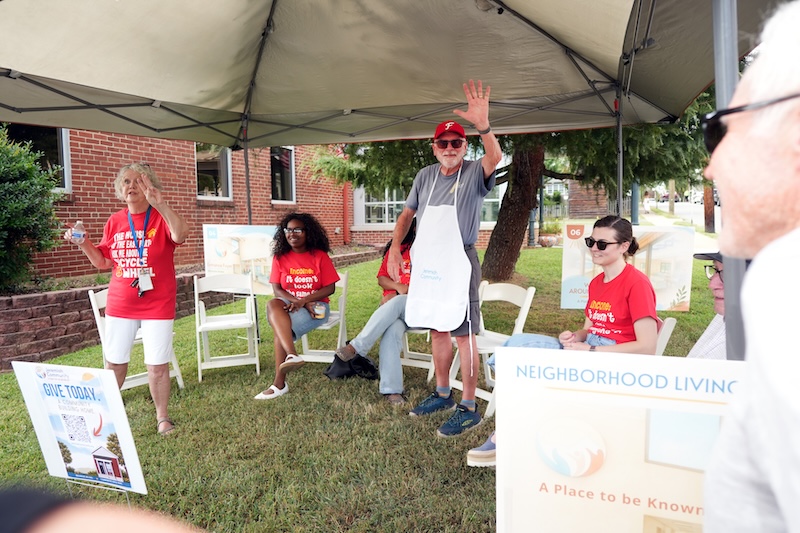
Because home takes all of us.
None of us has everything this required.
But God had already placed something we need in each other.
And that includes the neighbor who will someday live in a home like this. They are not simply the beneficiary of our gifts. They have gifts we need, too.
In all of my heart, I believe that our flourishing is bound together. When any neighbor cannot flourish, all of us are less than what we could be.
And that’s the Fredericksburg region that I see emerging here—a compassionate community where people who have been pushed to the margins aren’t simply served, but known, valued, loved, encouraged—and needed.
Brian Roinestad from Atlantic Builders has been saying for weeks now (and I’m going to paraphrase), “If we can build a house in 72 hours, imagine how quickly we can get a struggling neighbor under roof and start their path toward healing.”
In my faith tradition, three days carries a particular kind of hope.
Christ died on a Friday, and by Sunday the world was made new.
But the resurrection doesn’t erase suffering. Jesus rises with the wounds still there. Neither will this house or Jeremiah Community erase a lifetime of grief or trauma
But resurrection tells us that what HAS happened does not get the final word about what is possible.
And look what can happen in three days when God draws people and their gifts toward one another.
Something we’ve talked about for years becomes something we can touch. Something that seemed impossible begins to look like home.
This is not just a prototype of a house; this is a prototype of community.
A community where no one is disposable. Where everyone has something to contribute. Where your flourishing matters to mine, and mine matters to yours.
Where a young person who struggled in a traditional classroom discovers, “I am a builder.”
Where a person who has been defined by homelessness discovers, “I am a neighbor. I am needed. I belong.”
This house is evidence that God is already building that kind of community among us.
And what a gift that God has invited all of us to help build it.
by Dr. Meghann Cotter
Executive Servant-Leader
Micah Ecumenical Ministries